Document intelligence
AI Intelligence That Understands Your Documents
Meibel turns complex documents into AI-ready context: structure preserved, confidence scored, every answer traceable to its source.









Why you need meibel
Most AI Document Systems Lose the Structure That Makes the Answer Make Sense
OCR gives you characters. Chunking gives you fragments.
Neither gives you the structure that decides whether the answer is right.
Tables become paragraphs
Table structure is flattened into text. Rows, columns, and relationships between values disappear. A table rendered as a paragraph is useless for any downstream query.
References stop resolving
A 600-page legal document contains covenants that reference other covenants. None of that resolves when files are processed in isolation.
Domain metadata gets stripped
COAs come in thousands of formats from various suppliers. The fields that matter (batch number, test method, result, specification) vary by document. Generic extraction misses domain-specific fields entirely.

Document Intelligence is the layer that turns files into evidence
Most platforms stop at extraction. Document Intelligence starts there.
Understanding, not extraction
Document Intelligence does not treat documents as bags of text. It understands structure: headers scope sections, captions describe tables, footnotes relate to claims, charts contain data that is not in the text. Every element gets the processing path it needs.

Corpus intelligence, not file processing
Document Intelligence does not stop at the boundary of one file. When your documents reference each other, cite each other, or share structure, those connections are extracted and made traversable. Your document estate becomes a connected knowledge base, not a filing cabinet.

Retrieval that compounds
A single PDF can produce text chunks for semantic search, tables for SQL queries, metadata for filtering, and citations for graph traversal. All three retrieval modes are available simultaneously. An agent can find relevant content by meaning, query precise values from extracted tables, and follow citation chains to referenced documents in a single reasoning step.

Use Cases
Document Intelligence Across Industries
One data corpus. Multiple experiences. Meibel lets you process your data once and build as many solutions as you need on top, without reprocessing or rebuilding your pipeline.




.webp)
Not ready to
get hands-on?
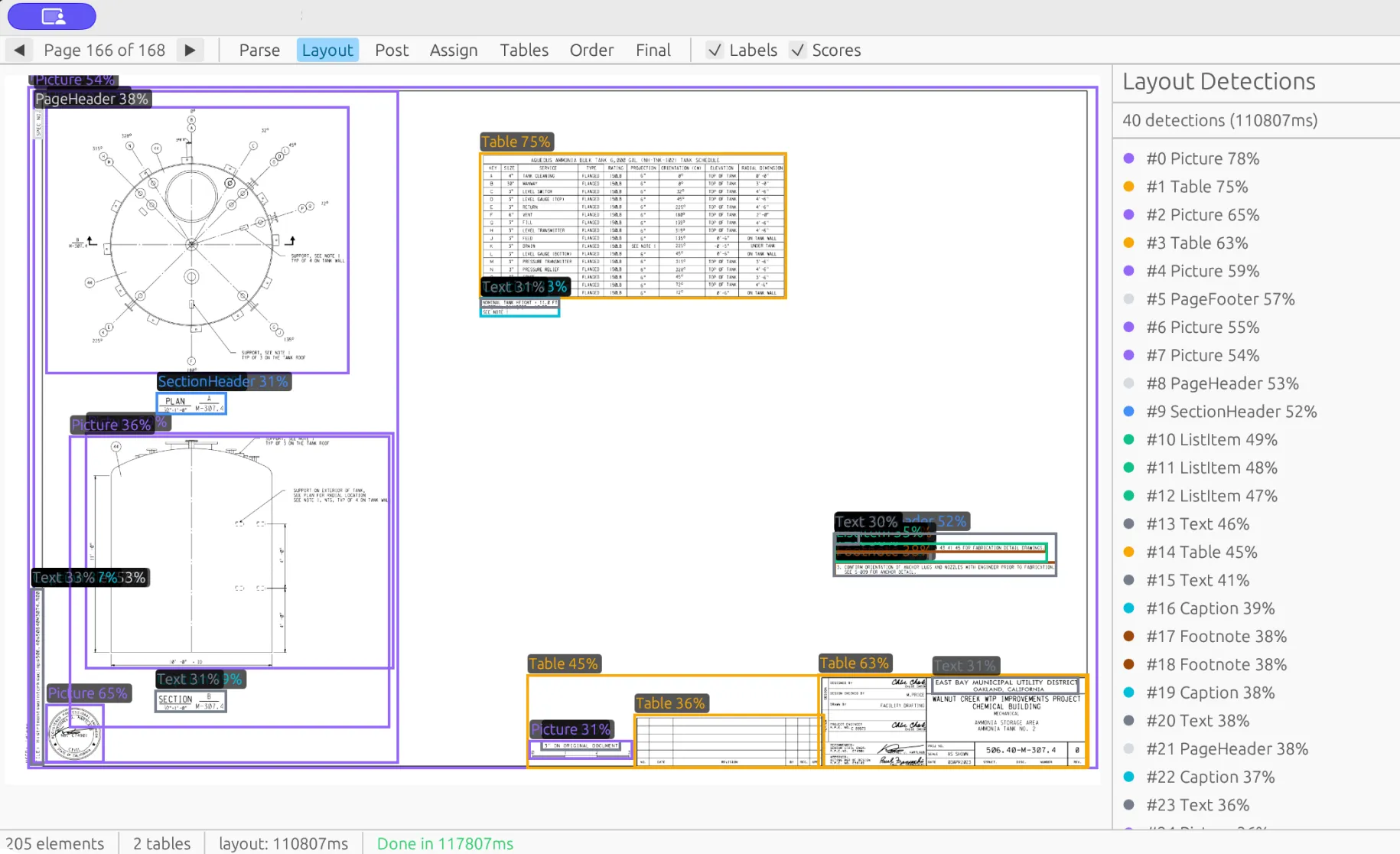
We tore down a 168-page fabrication spec. See exactly where extraction failed and how to build document AI that understands tables and graphs across the whole corpus.



Ingest and parse
Any file. Any complexity. Zero guesswork.
Drop in any file. The system detects the format, analyzes layout and reading order, and processes every element according to its type - automatically, with no configuration needed.
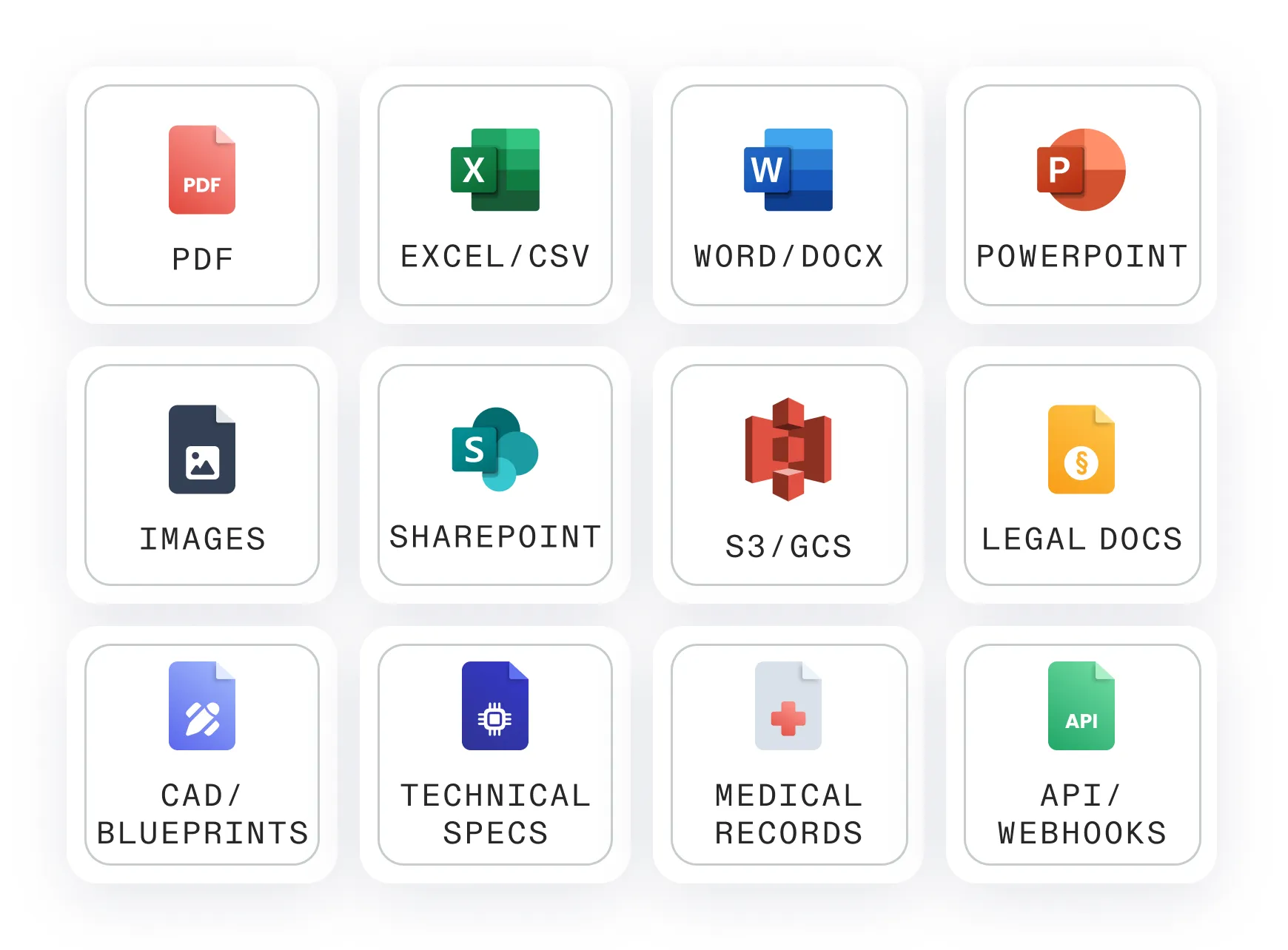
25+ formats supported: PDF, DOCX, PPTX, HTML, images, emails, spreadsheets, JSON, CSV, archives, and more
Layout understood: headers, paragraphs, tables, images, lists, captions, and their spatial relationships
Every element processed correctly: tables stay structured, handwriting gets read, mixed content handled automatically
Extract and trace
Every value sourced. Every field named. Nothing assumed.
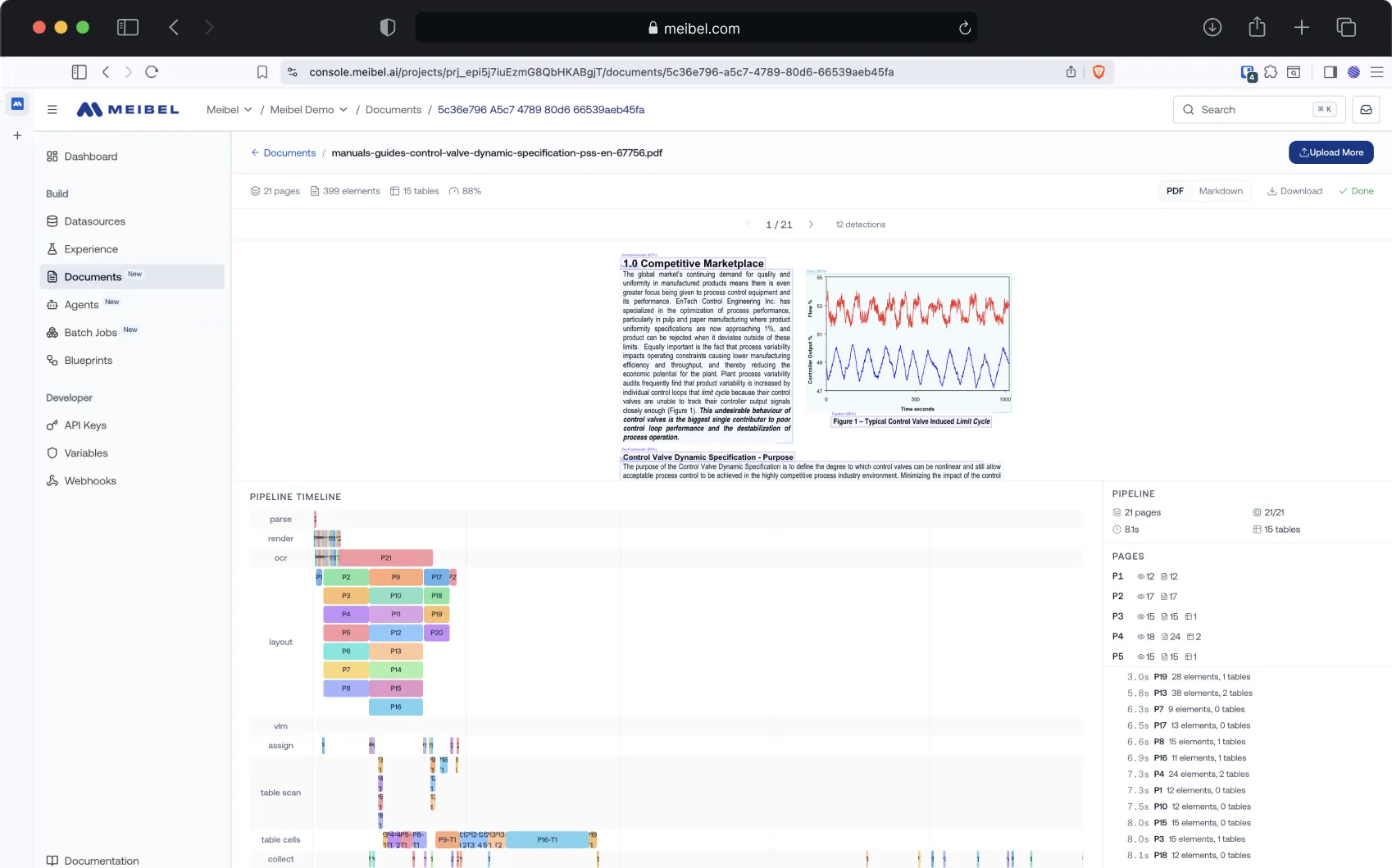
Every extracted element links back to its exact location in the source document, and every field is pulled according to what the document actually is - not a generic template.
Bounding box coordinates identify the precise region on the precise page
Seven built-in metadata models: insurance, legal, medical, manufacturing, construction, bibliography, and custom
Custom extraction schemas can be defined per data source, industry, or workflow

Score and route
Know what to trust. Act on it automatically.
Every extraction is scored across multiple independent dimensions: Coherence, Completeness, Correctness, Faithfulness, Relevance, and OCR Confidence.
High-confidence outputs move forward.
Low-confidence or critical fields trigger retry, review, or escalation.



What Our Clients Say
Trusted by AI Builders Worldwide

“Meibel's Generative AI platform has unlocked the full potential of SINE, our foresight analysis and scenario product. The Confidence Framework builds trust and transparency into SINE’s AI-driven insights that empowers our customers to confidently navigate complex strategic planning.”

“Meibel’s Generative AI Platform allows FAST, along with our subordinate Supporting Effort, to expand the scope of US Army projects we are bidding on. We now deliver AI within our solutions that opens new opportunities, ensuring the military of the transparency, accountability and confidence they require.”

“Meibel is a foundational technology for our Generative AI practice. Our customers demand accountability and transparency from AI solutions, along with seamless integration into their existing operations and workflows. Meibel's platform delivers on all fronts.”

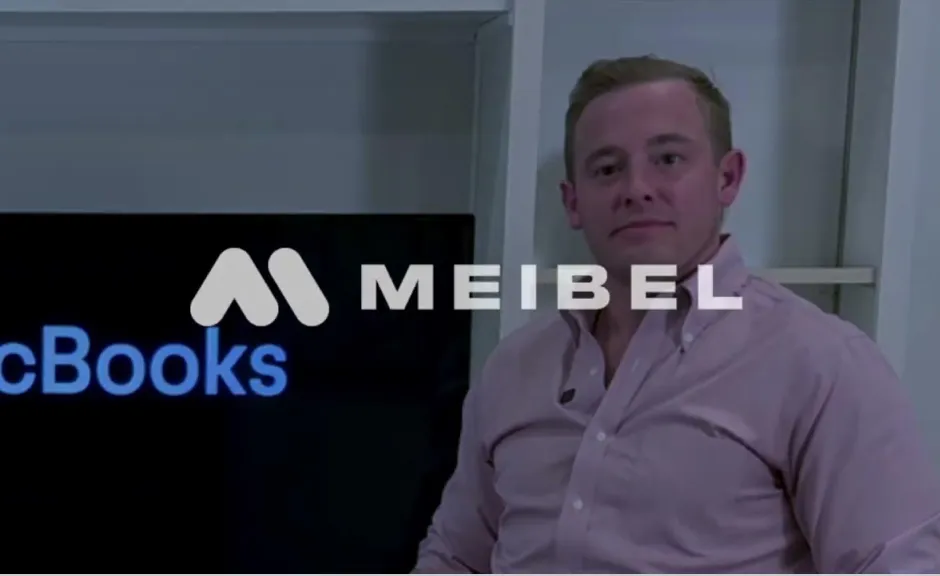
“We use Meibel to integrate generative AI into our SaaS product Specbooks+. We replaced thousands of lines of code and multiple other tools with better, measurable results.”

Try Meibel
Build Your First AI Agent Free
Upload a real document, the messy kind. Get back structured data. Then build an agent on it and run the same thing at whatever volume you have.


.webp)