

Every team that processes documents at scale hits the same wall.
You upload a PDF. The tool extracts some text. But the table that held your most important numbers? Flattened into a paragraph. The two-column layout? Read straight across, producing nonsense. The chart with trend data? Skipped entirely. The handwritten note in the margin? Invisible.
So you build workarounds. Custom code for edge cases. A separate parsing library for each format. Manual review on every output because you cannot be sure what the extraction missed.
And then someone asks the question that stops the project cold:
"Don't we need to train a model for each document type?"
For years, the answer was yes. Document automation meant a template or a trained model per type. A separate pipeline per format. A rebuild every time a layout changed.
That assumption is expensive. And it is no longer true.
We hear this on nearly every customer call. The pattern is remarkably consistent across industries:
The cost of the old approach is not just engineering time. It is the cost of maintaining a pipeline per document type, rebuilding each one when a format changes, and operating a separate model per attribute you want to capture.
Meibel's Document Intelligence uses a zero-shot approach to document parsing. Here is what that means in practice:
This is not prompt engineering. The parsing pipeline uses purpose-built models for layout analysis, table structure recognition, reading order, and OCR. Extraction is schema-constrained and model-agnostic, with customers bringing their own model keys. Neither stage requires training on the customer's document types.
The output preserves the relationships between elements: a table caption stays connected to its table, a footnote stays connected to its claim, a section header scopes everything beneath it.
Parsing a document with Meibel is a single API call. Submit a file, and the platform handles format detection, layout analysis, element extraction, and structured output.
The same document can be read back as:
Scanned documents, image-only PDFs, and mixed files (some pages digital, some scanned) all return the same structured output. There is no separate endpoint, no special flag, and no different workflow.
The capability matrix includes:
Layout analysis
Heading hierarchy
Table structure
Reading order
OCR
Orientation correction
Chart digitization
Vision model recognition
Confidence scoring
Provenance
Labels regions by content role
Assigns H1 through H6 from the document's typography
Recovers rows, columns, and spanning cells
Sequences content the way a person reads it
Recognizes text on scanned and image pages, multilingual
Rotates pages upright before recognition
Recovers line and scatter series from vector geometry
Reads formulas, charts, seals, and pictures
Scores each element and the document overall
Positions every element with bounding box coordinates
Getting text out of a document is table stakes. The real question is: what happens next?
Document Intelligence goes beyond parsing into three areas that compound on each other:
Layout detection identifies what each region of a page actually is. Images are classified by type and routed to the right processing path:
Four image types. Four processing paths. A chart in your document is data, not decoration.
Documents do not exist in isolation. A specification references a regulation. A regulation references another regulation. A deposition cites a medical record.
Document Intelligence builds a map of how documents reference each other, cite each other, and share structure, then uses that graph for retrieval that follows logical connections, not just semantic similarity. Semantic search finds what sounds similar. The reference graph finds what is logically connected. You need both.
Deep Transformation takes parsing further by building a fact graph from the document and projecting your schema onto it.
You define the output shape once, and it holds across every document: PDFs with tables, scans with handwriting, spreadsheets with mismatched columns, 200-page filings, 1,600-page specification books. The output shape is guaranteed.
This is not prompt engineering. The schema constrains the extraction, so the output structure is deterministic.
One insurance software company reduced their document processing pipeline from three minutes per document to seven seconds. A Fortune 200 manufacturer told us that when extracting safety-critical chemical data, minor errors can be severe legal liabilities. A construction company needs to trace every extracted inspection requirement back to the exact detail reference on the exact sheet in a 1,600-page specification.
The pattern is the same everywhere: teams that were maintaining one pipeline per document type, rebuilding when formats changed, and manually verifying outputs now run one pipeline across everything.
Tables stay tables. Charts become data. 25+ formats supported. Confidence scored. Source traceable.
The documents your business runs on, the ones that were never designed for automation, are now accessible to both AI systems and human teams.
Document Intelligence is the foundation. What you build on it, agents that extract and validate, workflows that route and escalate, applications that answer and prove, runs on the Meibel platform.
Ready to build your first AI agent with Meibel? Sign up free, upload your documents and enable your first agentic workflow with confidence scoring & source tracing.


No. Results depend on the questions, document collection, graph construction, and retrieval configuration. Evaluate both approaches on representative tasks. Some workflows benefit from combining them, especially when answers require evidence connected through references.
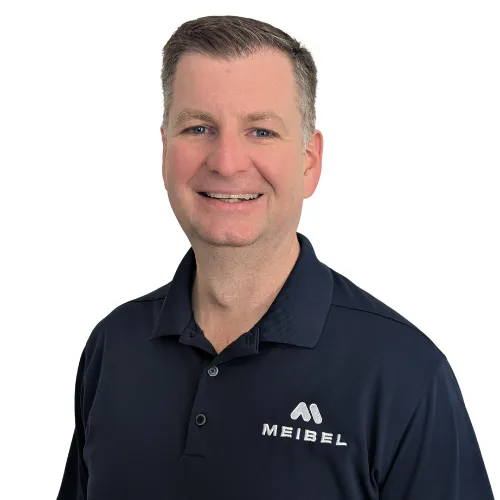
Kevin McGrath is the Co-Founder and CEO of Meibel, bringing over 20 years of experience in cloud infrastructure and platform engineering. He previously served as Vice President and General Manager at Spot by NetApp (2022-2024), where he led a global organization of over 1,000 people, and held roles as Chief Technology Officer and VP of Architecture at Spot (2017-2022). He holds AWS Certified Solutions Architect (Professional), AWS Certified DevOps Engineer (Professional), and earned his BA in Economics and Master's in Computer/Information Technology Administration from University of Maryland.
REQUEST A DEMO
See how Meibel delivers the three Cs for AI systems that need to work at scale.