CONTROL

Measure What the Evidence Supports. Act on the Signal.

Confidence is verification. Score every output against its evidence. Enforce thresholds on what proceeds. Give teams the signals to trust, question, or block before anything reaches production.

Sign Up Free

WHY CONFIDENCE MATTERS

Without Measurement, Every Output Looks the Same.

No way to score what an AI output is based on. Teams are stuck between two bad options: automate blindly or review everything manually. These are the symptoms.

Indistinguishable Quality

The model sounds confident whether it is right or wrong. No signal tells teams which outputs are supported by evidence and which are fabricated. Every answer looks the same.

Blended Failures

When an output is wrong, teams cannot tell whether the issue came from retrieval, a tool call, or generation. Failures blend into one broken result. No indication of where things went wrong.

Ungrounded Long-Tail Responses

Common queries may work. Edge cases and long-tail queries produce ungrounded content with no warning. Fabricated answers arrive in the same format and tone as correct ones.

Evals That Miss Production

Offline evaluations use synthetic data and controlled conditions. They pass in staging. In production, retrieval paths, context assembly, and tool behavior differ. Eval results stop reflecting what the system actually does.

Silent Quality Drift

Embedding changes, data updates, and workflow edits degrade output quality over time. No drift signals. Teams discover the problem when users complain, not when the system detects it.

No Evidence Verification

Teams cannot verify what evidence supported a given answer. Claims arrive without provenance. Auditing means manually searching for the source, if it exists at all.

HOW CONFIDENCE WORKS

Score the Output. Then Act on the Signal.

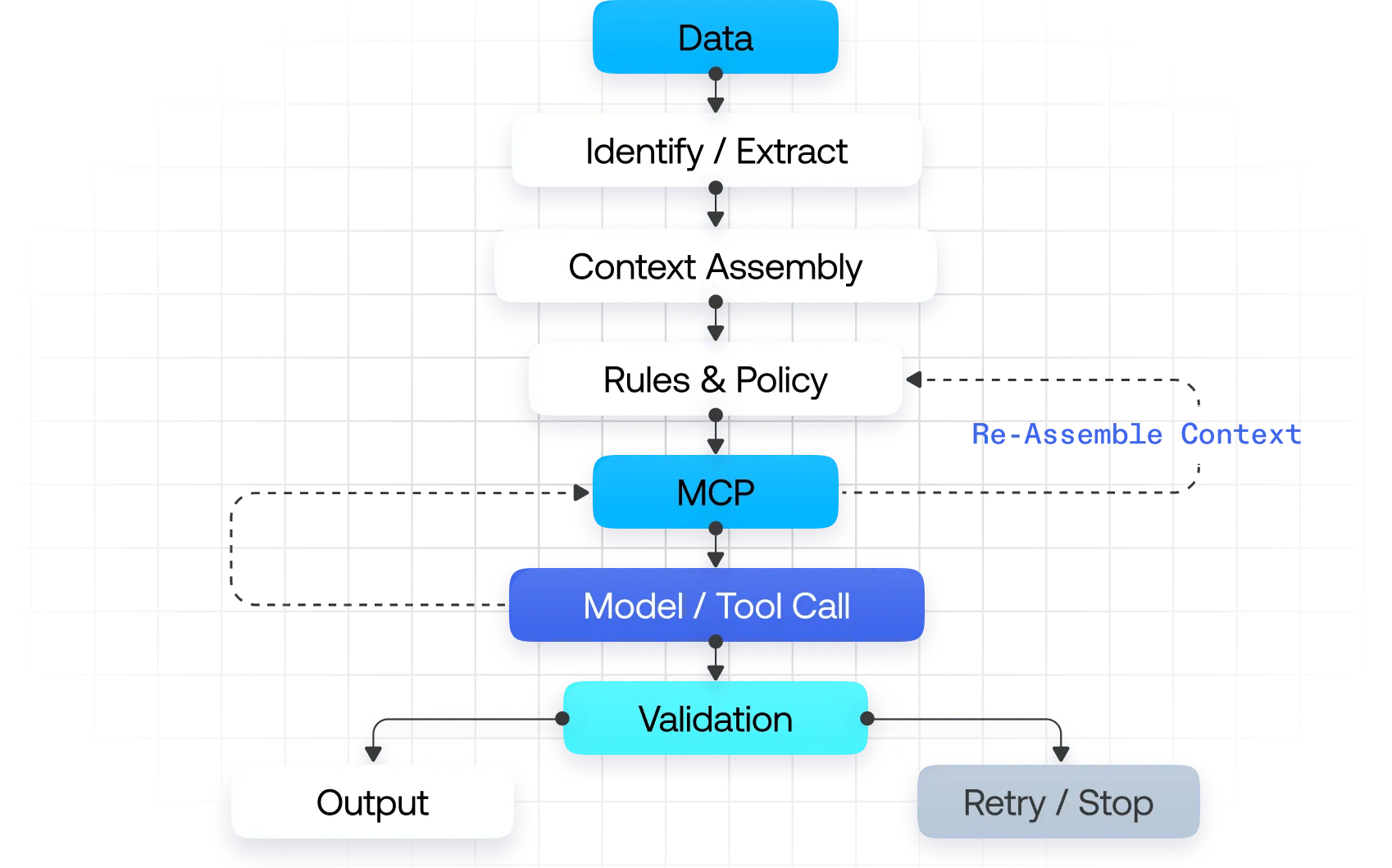
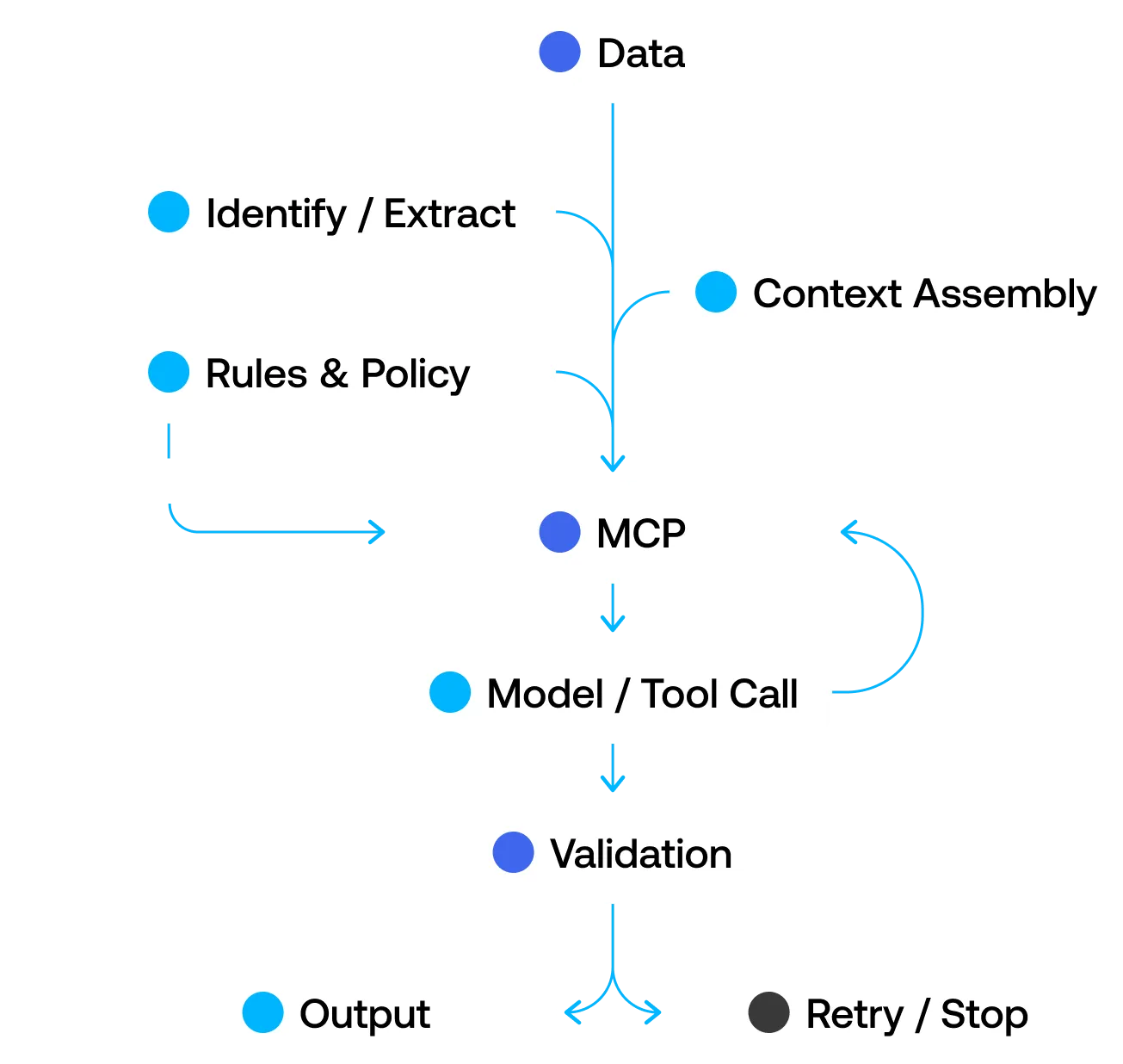
Confidence is not a model guess. It is a measurable signal derived from execution. Meibel evaluates confidence by measuring evidence quality, context completeness, and step-level behavior, then uses those signals to determine what proceeds, what retries, and what stops.

Confidence Evaluation
Acting on Confidence
Evidence Scoring

Score How Well Each Output                    Is Supported

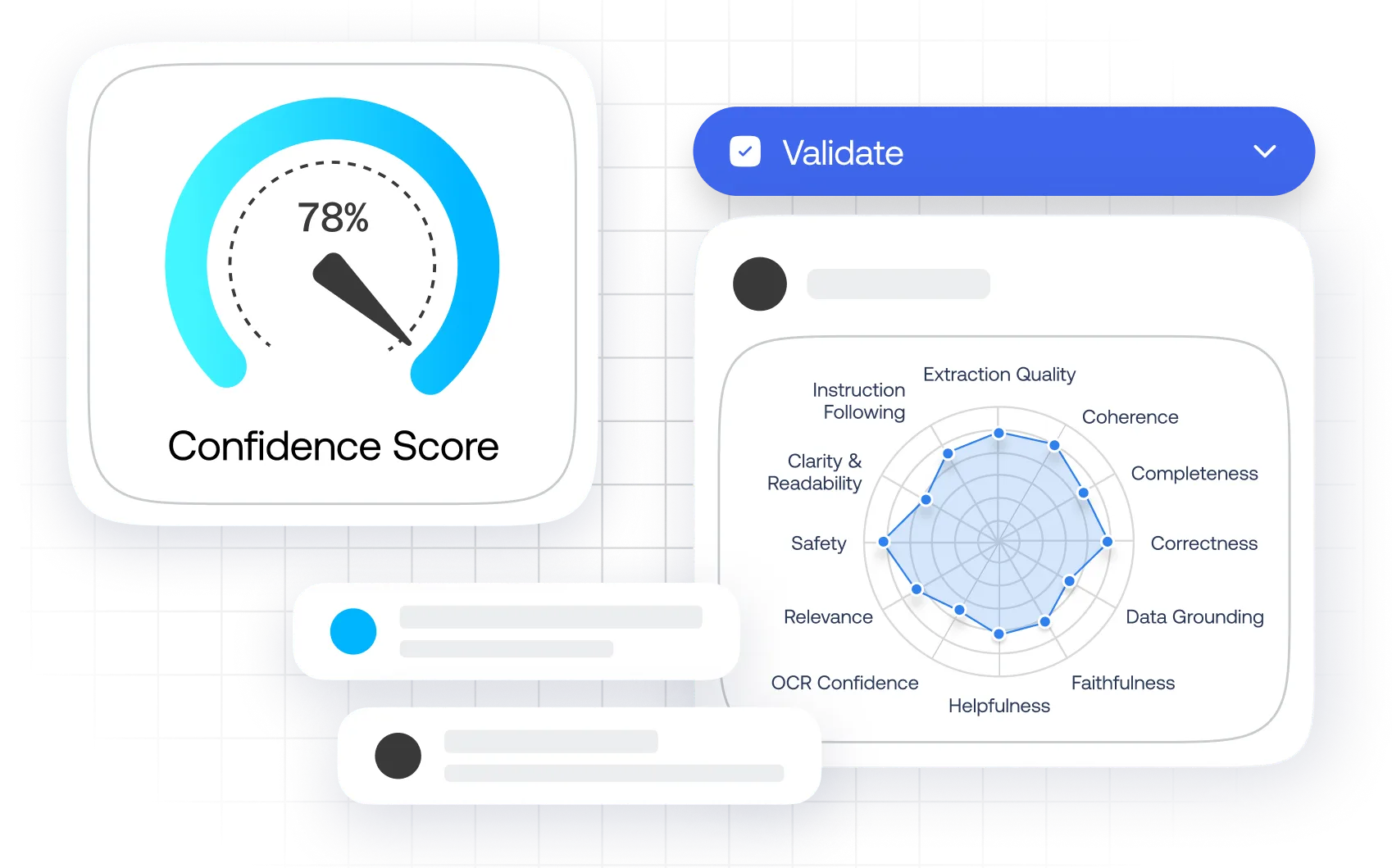
Every output receives a confidence score based on the quality and relevance of the evidence behind it. Meibel evaluates whether the retrieved context actually supports the claims in the output, not just whether context was present. This is not a model self-assessment.       It is an independent evaluation of how well evidence maps to the  generated result.
Context Engineering From Your Documents
AI Agents
LLM Hardrails
AI Runtime Orchestration

Agent Control & Runtime Governance

You define the agent: instructions, data sources, tools, and output schema. Hardrails enforce exactly what the agent can see and do at runtime, before the model call, during data access, and at every tool execution.

  • Agent definitions versioned, immutable

  • Execution policies enforced before the model runs

  • Approval gates on any step

  • One agent, unlimited scopes

Agent Control & Runtime Governance
AI Confidence Scoring
Source Tracing
Drift Detection

Confidence You Can Measure

Meibel scores every extraction and every agent step across independent dimensions: Correctness, Coherence, Completeness, Faithfulness, Relevance, and OCR Confidence. Scoring is built into execution, not bolted on after.

  • Evidence-Backed Decisions

  • Outcome Provenance

  • Decision-Aware Automation

Confidence You Can Measure

Confidence Scoring.
Under the Hood.

How Meibel measures evidence quality, enforces confidence thresholds, and detects drift before it reaches production.

Download the White Paper

CONFIDENCE SIGNALS

Every Layer. Every Step. One Consistent Score.

Confidence is evaluated across retrieval, context assembly, tool execution, and model generation. Scores are consistent regardless of which model, tool, or data source is involved. When any component changes, the confidence layer detects the impact. No need to rebuild the evaluation framework.
Meibel Dashboard

WHAT ENTERPRISE AI TEAMS BUILD WITH MEIBEL

AI Agents for Industries That Run on Complex Data

Manufacturing and Industrial Distribution: Supplier Document Extraction and Quality Monitoring

Extract product specifications, COA values, batch numbers, and test methods from thousands of supplier documents in different formats. Run trend analysis across extracted data to catch quality shifts over time. One manufacturer processes 30,000 COAs per month and uses agents to build a queryable product information system across 11,000+ technical documents.

Video Cover Image

Construction and Engineering: Spec Extraction to Inspection Automation

Extract inspection requirements from 1,600+ page specification documents. Match requirements to SOPs by following references from spec to SOP to inspection template. Push structured data to project management systems. One construction company uses agents across 100+ projects per year to automate the chain from specs to inspections to accountability.

Video Cover Image

Insurance and Financial Services: Claims Document Processing and Validation

Extract policy details, financial fields, and coverage metadata from carrier statements and claims documents. Validate extracted data against structured policy tables. Score confidence on every financial value. One insurance software company reduced document processing from minutes to seconds while scaling from 110 to 30,000 users.

Video Cover Image

Legal, Compliance, and Government: Regulatory Translation and Compliance Mapping

Translate regulatory documents into compliance policies. Follow the reference graph from a policy clause to the regulation it derives from, and cross-reference regulations with structured compliance data. Agents produce auditable outputs with per-field provenance back to the page and region each value came from.

Video Cover Image

Enterprise Knowledge Bases: Document Q&A with Source Citations and Confidence Scores

Connect your knowledge bases and let teams ask questions with source citations, confidence scores, and precise numerical answers. Combines search by meaning, structured query for the numbers, and graph traversal across citations, in one reasoning step. Works across legal agreements, technical manuals, formulation documents, and RFP libraries.

Video Cover Image

Document Corpus Analysis: Schema Discovery Before You Build

Analyze a document corpus and propose extraction schemas before you build. The agent reviews your documents, identifies common fields, groups document types, and produces a discovery report. One customer used this to analyze 200+ files and define a normalized schema before writing a single extraction rule.

Video Cover Image

CRM and System Integration: Structured Data Extraction to Downstream Action

Process CRM data, call external APIs, route actions based on confidence scores, and push results to downstream systems. This pattern works without Document Intelligence when your data is already structured or accessible through APIs and tools.

Video Cover Image

Services Partners and SIs: Reusable Agent Patterns Across Multiple Clients

Build reusable agent patterns that deploy across multiple clients. Flexible rules per client. Clear separation of logic and data. One partner identified 152 automatable tasks across five workstreams for a single client and delivers 2-3x faster than building from scratch.

Video Cover Image

Frequently Asked Questions

Is this just model confidence or log probabilities?

Retrieval by meaning is one of three modes, not the whole system. Standard RAG matches a query against chunks and returns passages. A Meibel datasource also keeps your structured data queryable by its columns and values, and keeps the references between documents traversable, and the agent chooses which mode fits the question. The platform recovers structure during ingestion rather than relying on similarity alone.

Can confidence stop an answer from being returned?

No. The datasource is separate from the agent definition. Agents bind to it, so changing a model or publishing a new agent version does not touch the prepared data.

Does confidence work across different models?

Tables are rebuilt as grids with rows, columns and spanning cells, and stay addressable by cell position. Line and scatter charts are digitised back into series data rather than described in prose.

How does Meibel detect quality drift?

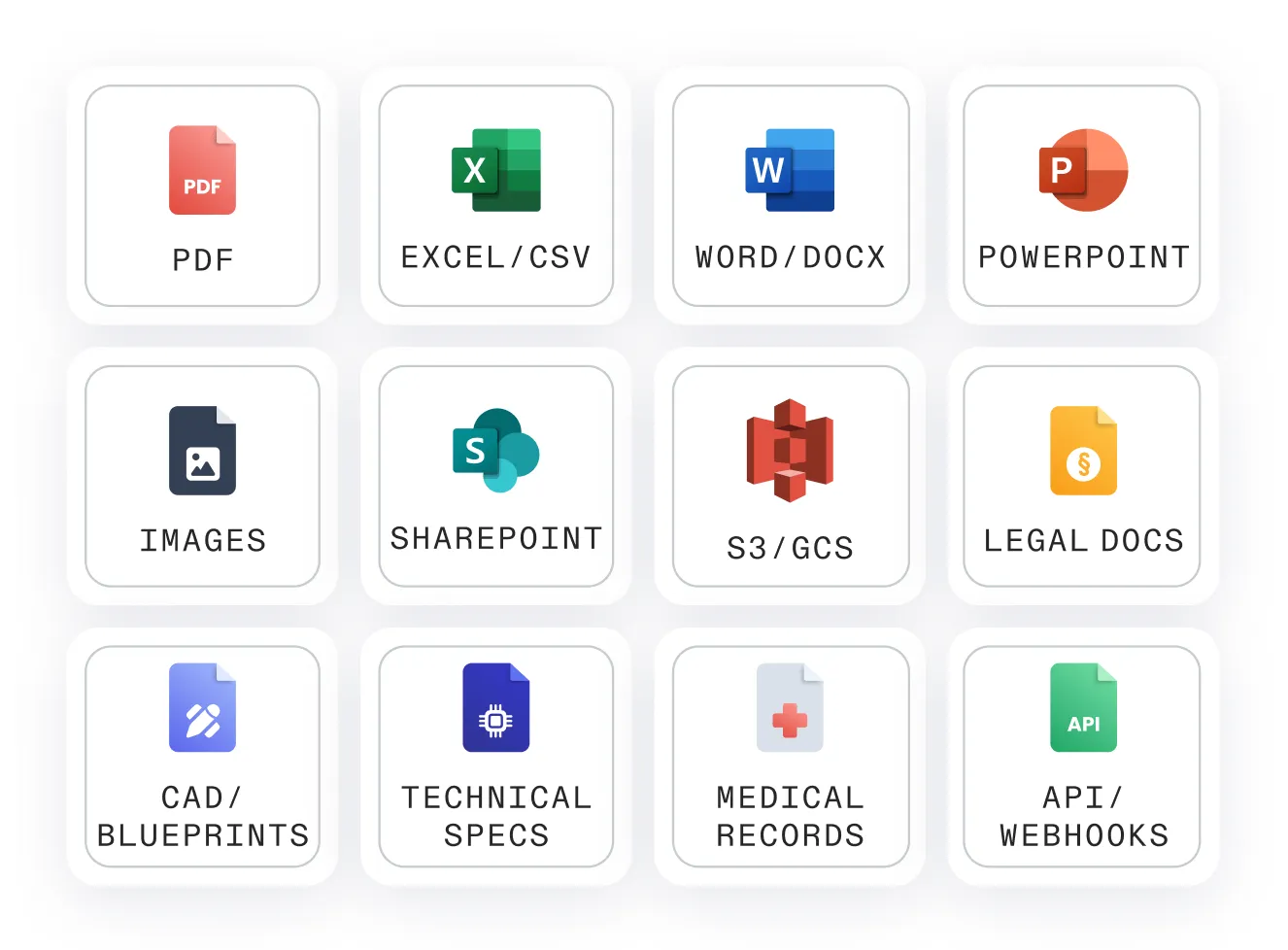
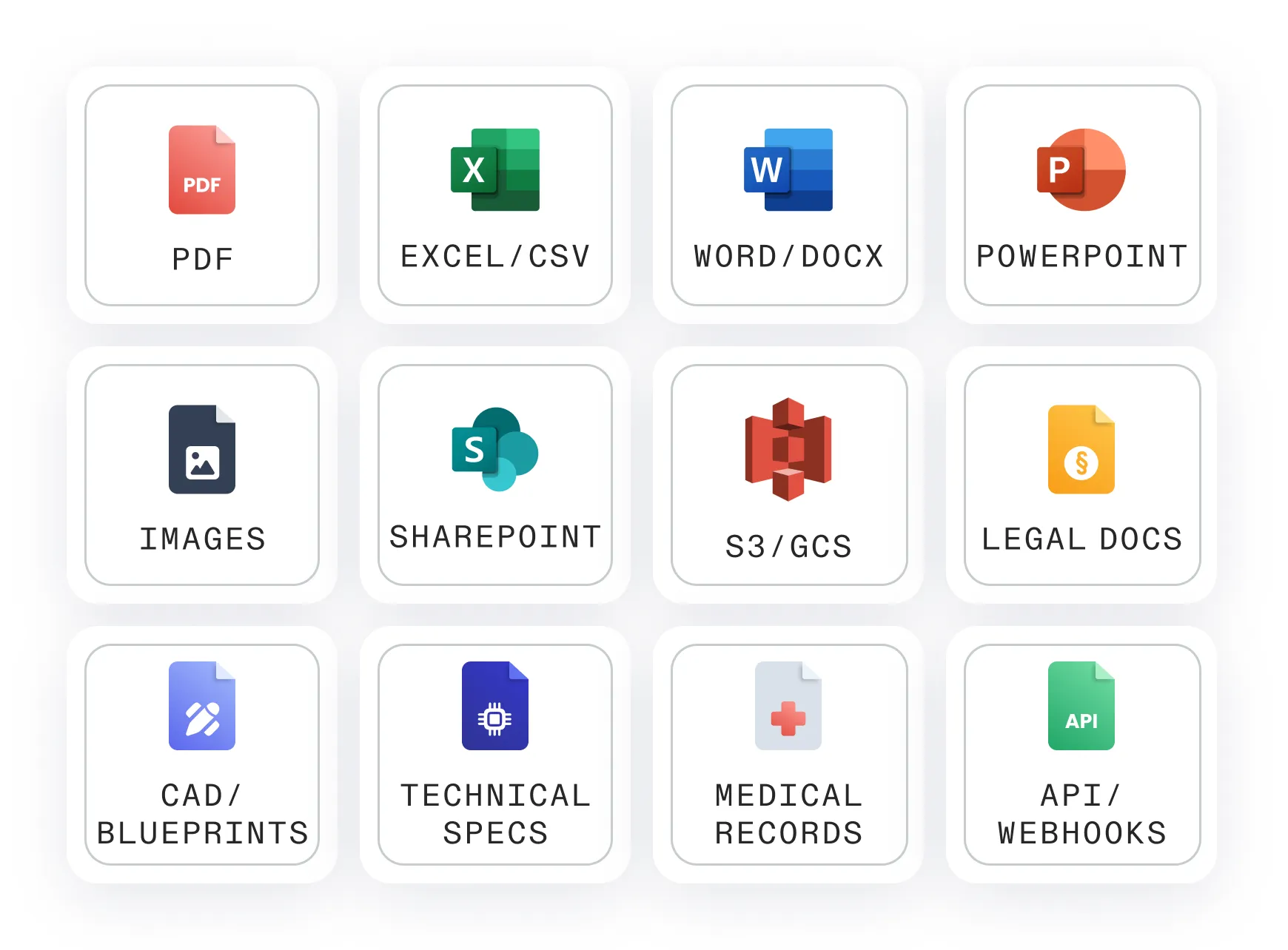
25+ formats including PDFs, office documents, images and scans, email and archives. Medical records are supported. CAD and blueprints are not.

What is the difference between evidence scoring and context completeness scoring?

There is no practical page ceiling. Documents up to 1 GB, and that limit is raisable per customer through the API.

Does this replace my evaluation or testing framework?

No. Meibel orchestrates how data is prepared and used for AI without replacing your storage. It adds structure, metadata and provenance between your sources and your model calls.

How does Confidence relate to Context and Control?

No. Meibel orchestrates how data is prepared and used for AI without replacing your storage. It adds structure, metadata and provenance between your sources and your model calls.

Build Your First AI Agent Free

Upload a real document, the messy kind. Get back structured data.
Then build an agent on it and run the same thing at whatever volume you have.

Meibel document parsing results with traceability
Limited-Time Offer

Free Credits to Build an AI Agent Grounded in Your Data

We're offering a limited number of free platform credits. Sign up free now to claim them.
Sign Up Free