Context ENGINEErING FOR AI AGENTS
Meibel prepares your documents and records before any model is called: structure recovered, metadata indexed, every element positioned and scored.




the problem
When context is assembled at runtime out of prompts and glue code, nobody can tell which part broke. A team builds an ingest path every time there is a new document type. Nothing compounds.
Data was never structured for a model to use. Every new document type becomes another engineering project.
Tables, headings and reading order are flattened into plain text before the model ever sees the page. A two-column layout with footnotes arrives as one scrambled block.
Teams cannot explain why one passage was selected and another ignored, so they cannot fix it when it is wrong.
The narrative sits in PDFs, the numbers sit in tables. Answering one question means querying two systems and reconciling them by hand.
Teams cannot recreate the exact context behind a given output, so a bad answer cannot be investigated, only regenerated.
Trying a new model means reprocessing the corpus. Data preparation that has to be redone is not preparation.

HOW IT WORKS
This is a zero-shot process. That means we did not train anything on your document type, we did not build a template, and we did not need to know your industry. One pass, and it gets everything.
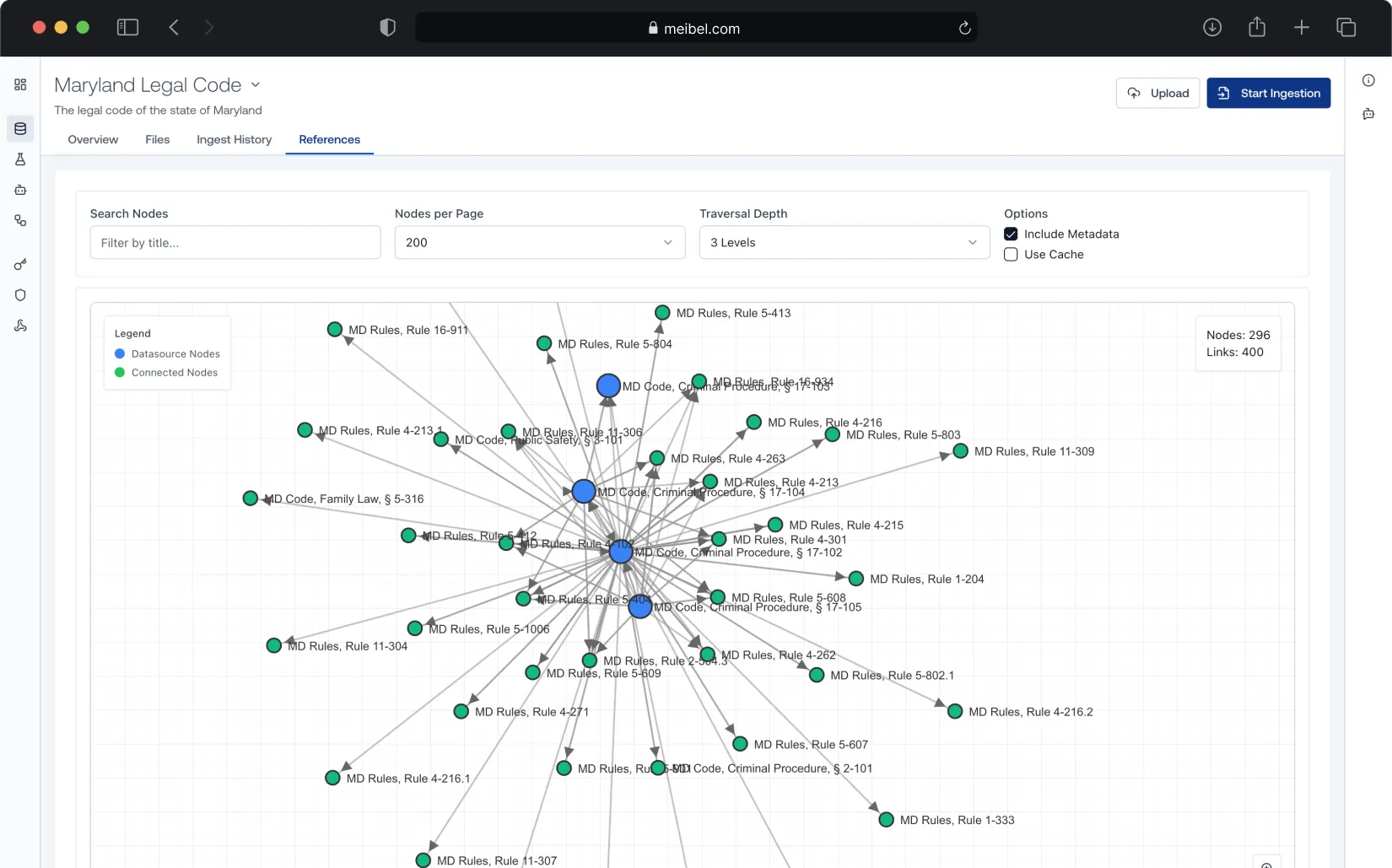
Connect a source or upload files. 25+ formats. The pipeline classifies and segments every page: layout regions labelled by content role, tables rebuilt as grids, charts digitised back into series data, formulas and seals read by vision models, pages rotated upright before recognition where they need it. Citations, references and cross-references are extracted at the same time, so a document arrives already connected to the ones it points at. No schema to define first, no per-format configuration.
Metadata arrives three ways: extracted automatically as files are processed (filenames, page numbers, hierarchy), applied from prebuilt shapes for common document types, or annotated by hand where a domain needs it. Indexed metadata fields are what execution policies later filter on. Prepare the data once and the access boundaries you set later have something real to attach to.
At runtime the agent searches by meaning, queries by column, follows a citation chain, or does all three, and the tool activity record shows which datasources were searched, what queries were used, and what came back. When an answer needs review, that record is where you look.
The same parsed document is available three ways, and which one you want depends on who is reading. Markdown for models and people: readable text with headings, lists, tables, formulas and chart tables. Structured for programmatic use: typed pages of elements with tables, chart data, positions and confidence. Annotated for text and position together: markdown carrying bounding-box provenance comments.

In our free 45-minute webinar, Kevin McGrath and Aaron Aguillard walk through why text extraction is not document intelligence, and what breaks before the model ever runs. Real examples from the field: chemical safety data, dense specifications, product catalogs.



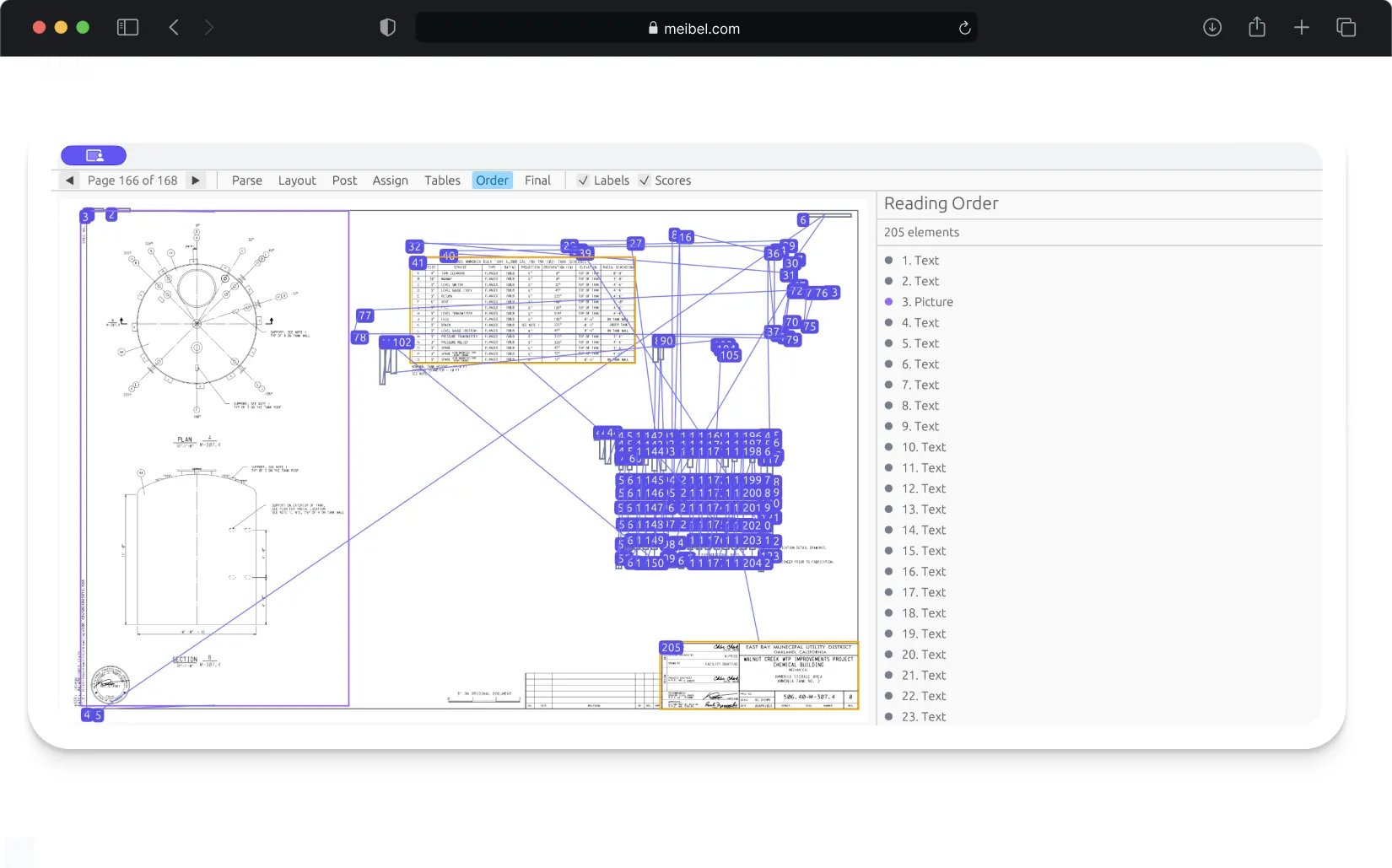
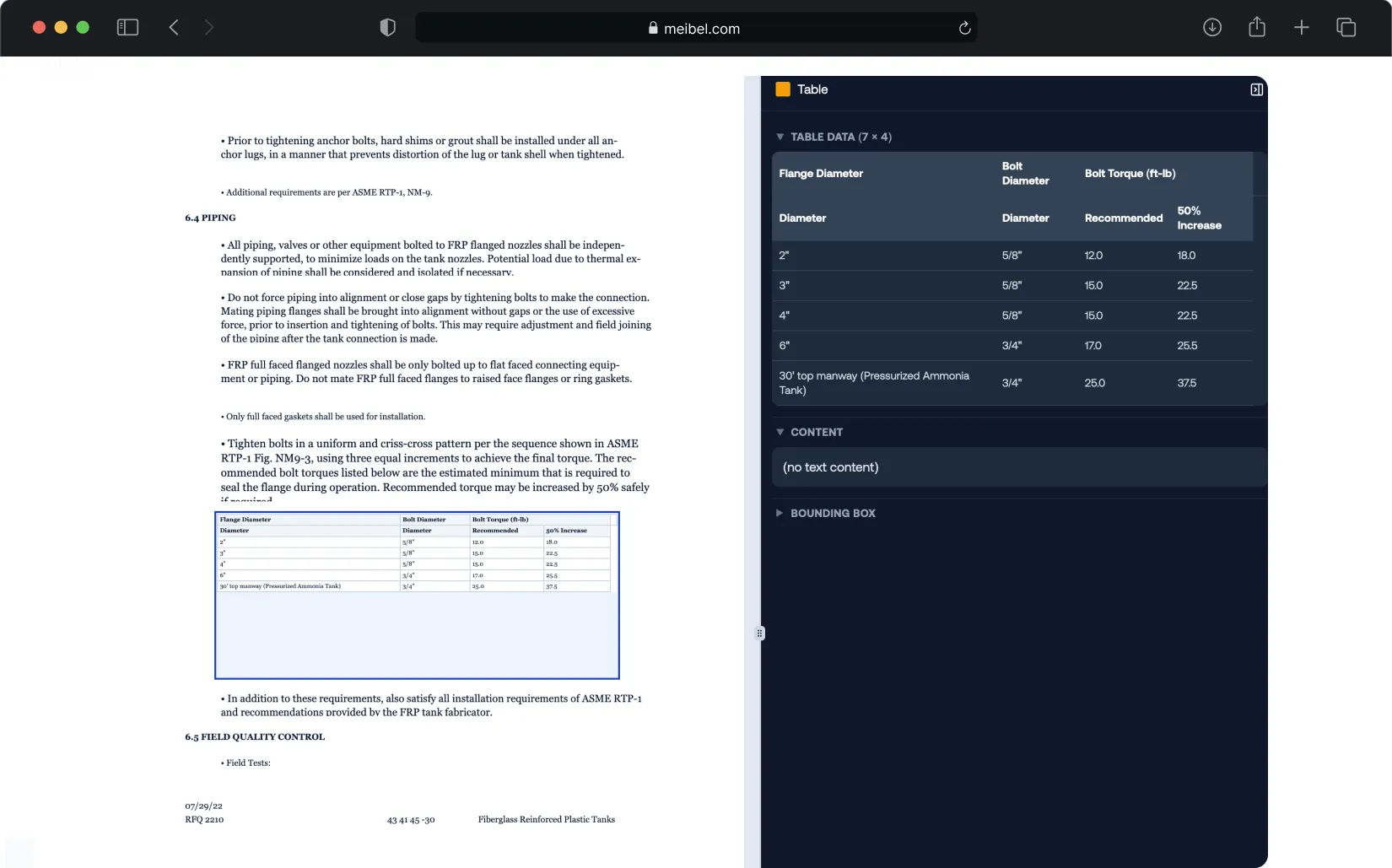
Detects headers, paragraphs, tables, images, lists, captions, page layout, reading order, and spatial relationships. Multi-column documents are read in the correct order. A section header scopes everything beneath it. A caption is linked to its table.
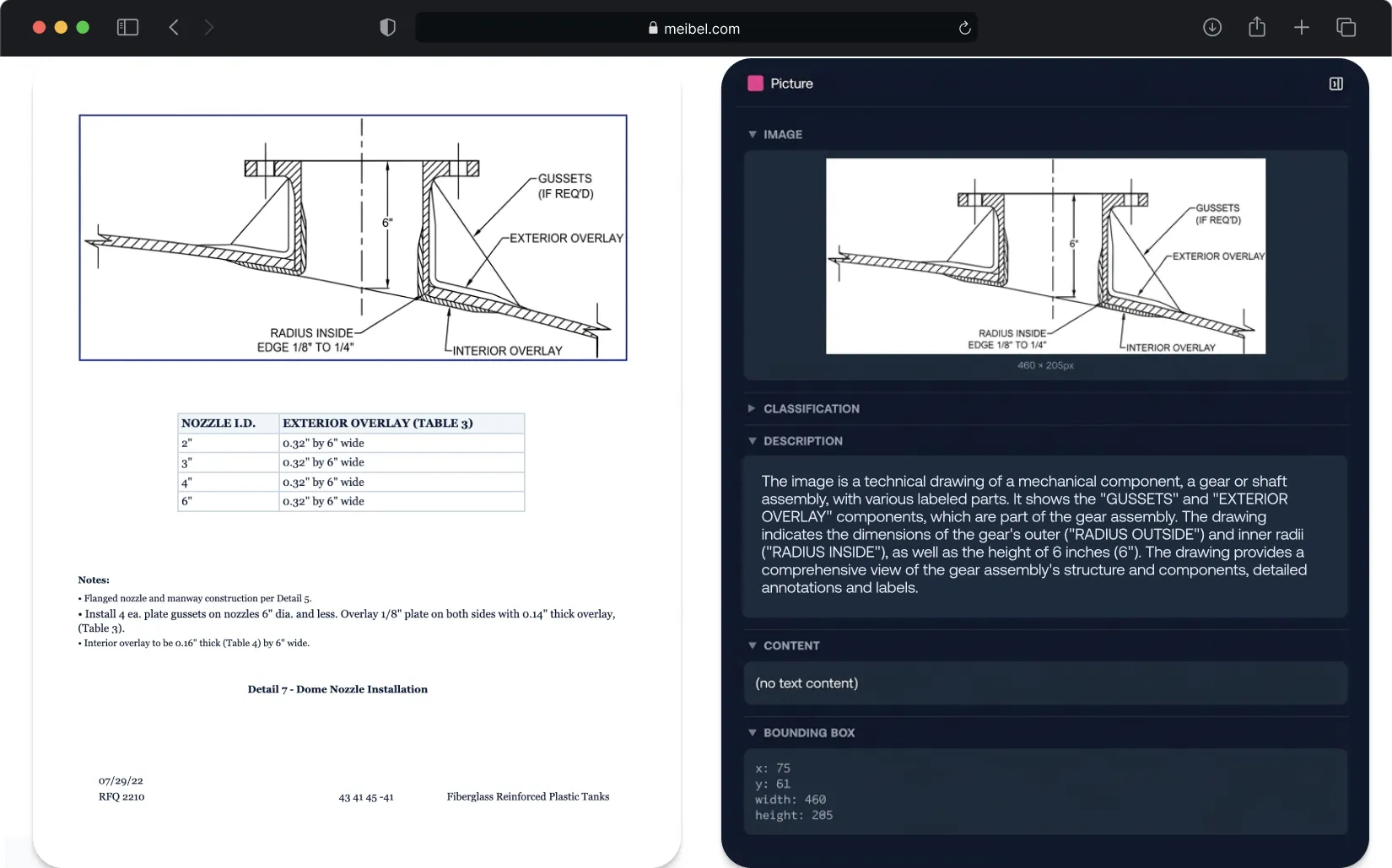
Tables stay structured. Charts are processed through vision models to extract data points. Scanned tables get OCR plus schema inference. Diagrams get visual descriptions. Photographs get semantic descriptions.
Seven built-in metadata models extract the fields your industry uses. E.g. insurance: policy_number, effective_date, carrier, coverage_type. Legal: case_number, jurisdiction, filing_date, parties.
Every extracted value traces back to the exact region on the exact page of the original document. Bounding box coordinates identify the precise source location. Click a data point, see the source. No black boxes.
Six scoring modules evaluate every output: Coherence, Completeness, Correctness, Faithfulness, Relevance, and OCR Confidence. Scores drive routing: high-confidence outputs move forward automatically, low-confidence outputs trigger retry, review, or escalation.
Combine semantic search for meaning, SQL over extracted tables for precise numerical answers, and graph traversal across references, versions, and document relationships. All three modes available simultaneously on the same corpus.

Supported formats and data sources
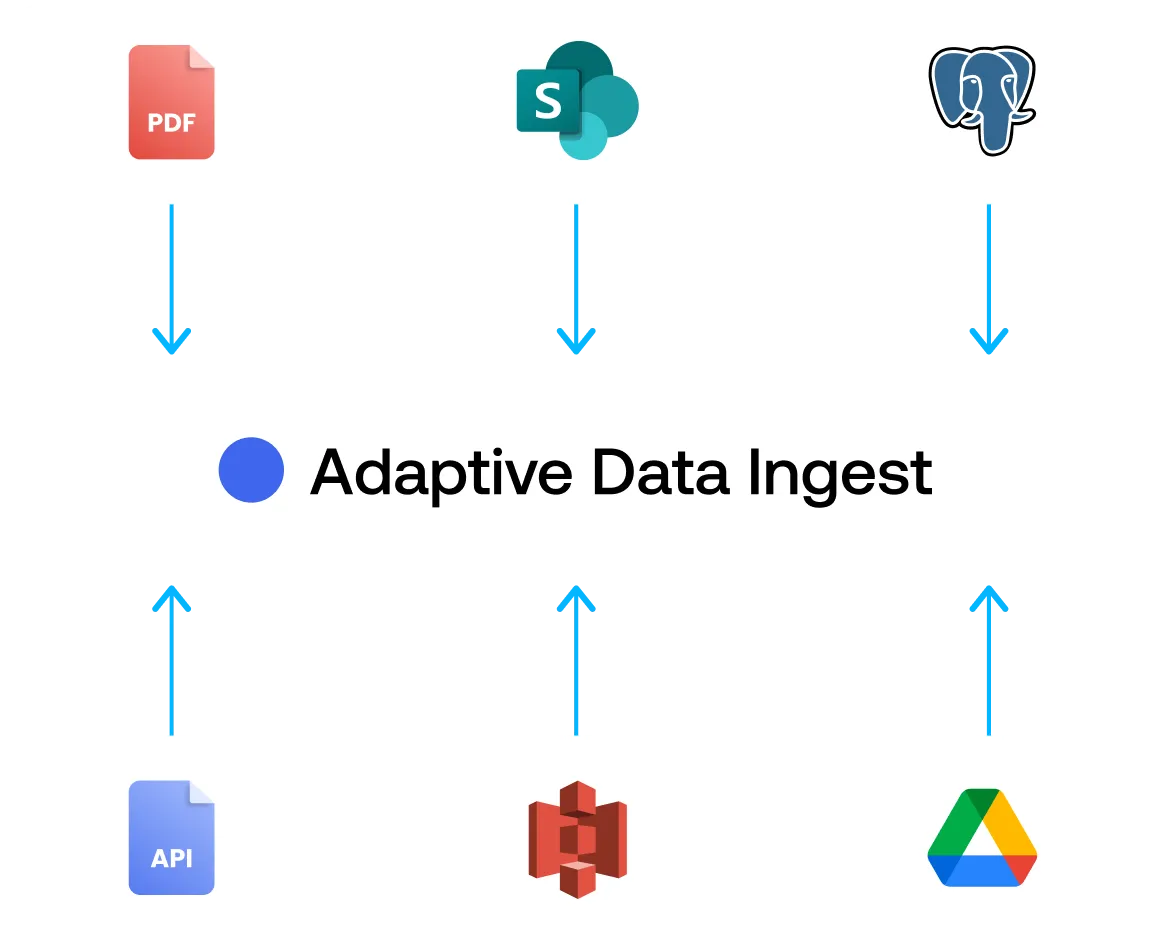
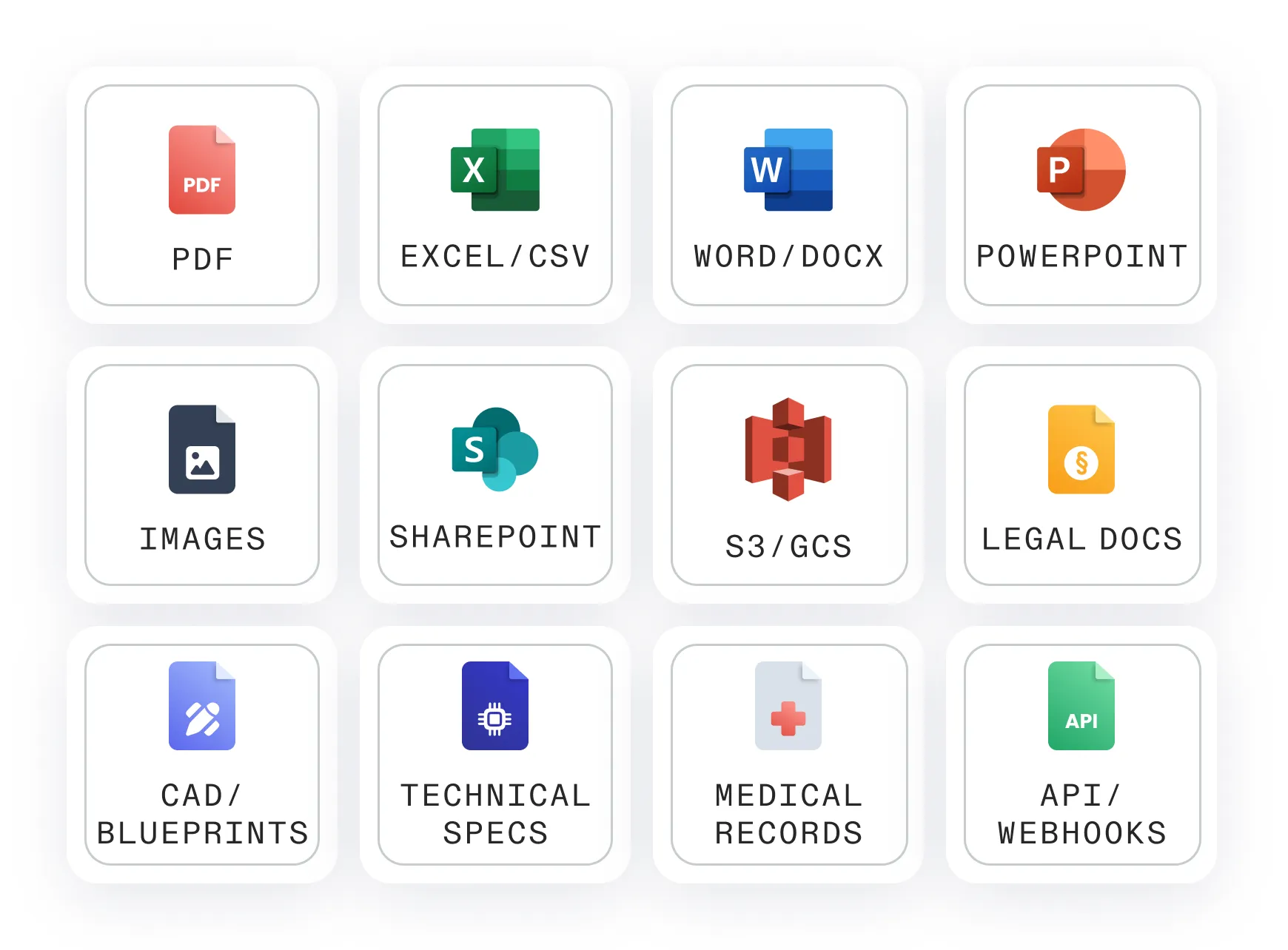
Connect a cloud storage bucket, a SharePoint library, an S3 source, or upload files directly. 25+ document formats are supported: PDFs, Word documents, PowerPoint files, Excel spreadsheets, HTML, images, scanned files, emails, and archives. Medical records are supported. CAD and blueprints are not.
One connected source can hold PDFs from one supplier, spreadsheets from another, and scanned images from a third. They all land in the same datasource, queryable together.
WHAT ENTERPRISE AI TEAMS BUILD WITH MEIBEL








Not a clean sample. The spec with 1,600 pages, the scanned batch from 1998, the supplier set where every format is different. That is the one worth watching.

Retrieval by meaning is one of three modes, not the whole system. Standard RAG matches a query against chunks and returns passages. A Meibel datasource also keeps your structured data queryable by its columns and values, and keeps the references between documents traversable, and the agent chooses which mode fits the question. The platform recovers structure during ingestion rather than relying on similarity alone.
No. The datasource is separate from the agent definition. Agents bind to it, so changing a model or publishing a new agent version does not touch the prepared data.
Tables are rebuilt as grids with rows, columns and spanning cells, and stay addressable by cell position. Line and scatter charts are digitised back into series data rather than described in prose.
25+ formats including PDFs, office documents, images and scans, email and archives. Medical records are supported. CAD and blueprints are not.
There is no practical page ceiling. Documents up to 1 GB, and that limit is raisable per customer through the API.
No. Meibel orchestrates how data is prepared and used for AI without replacing your storage. It adds structure, metadata and provenance between your sources and your model calls.
.webp)