CONFIDENCE
A fluent answer and a correct answer look identical. Confidence turns that into a number you can act on: how well the evidence supported the output, how the retrieval behaved, whether the tool call was the right one.
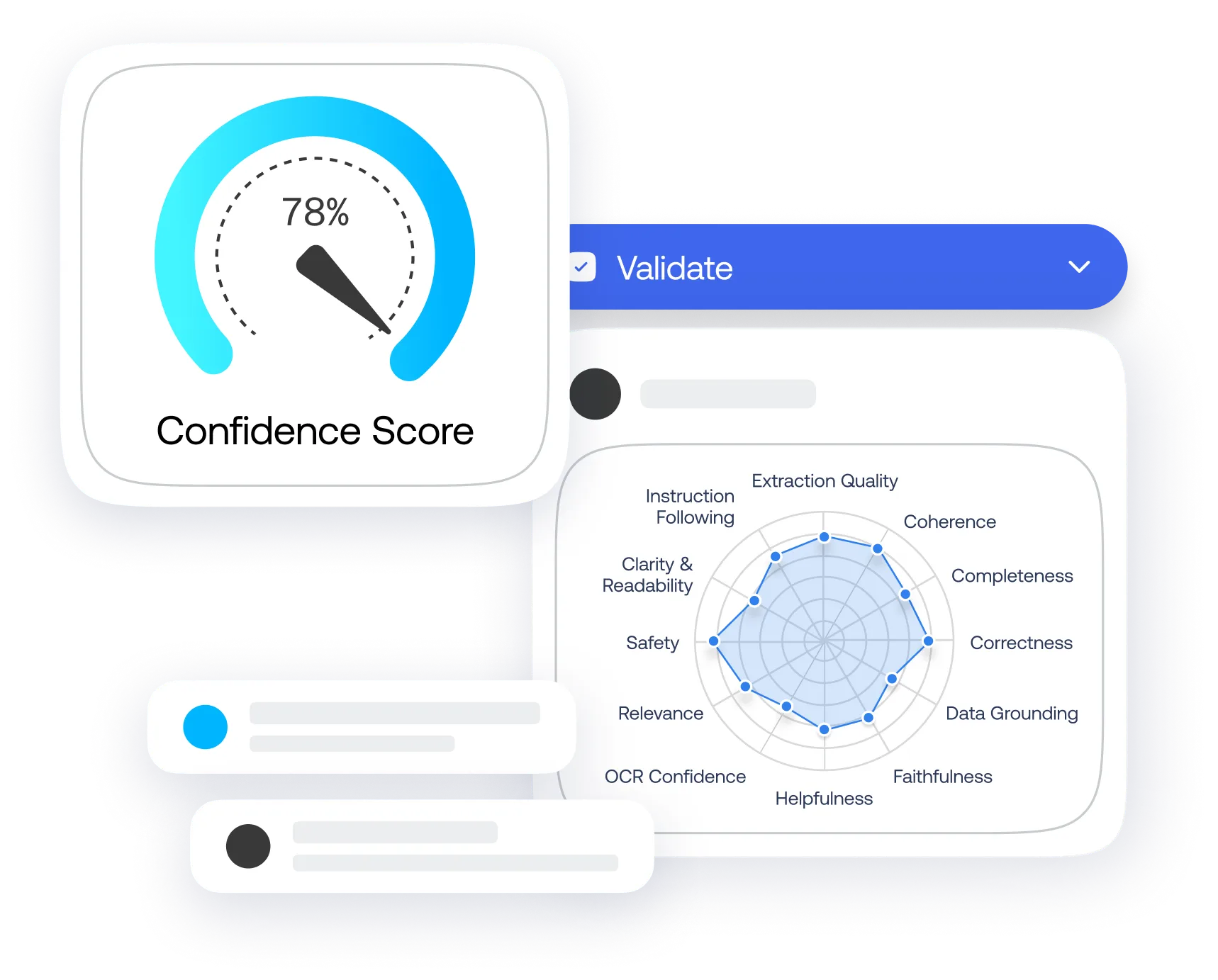




WHY CONFIDENCE MATTERS
No way to score what an AI output is based on. Teams are stuck between two bad options: automate blindly or review everything manually. These are the symptoms.
The confident tone is identical whether the answer is grounded or invented.
Retrieval, tool calls and generation all fail into the same bad answer, with nothing separating them.
A document-level number tells you something is wrong somewhere, which is the same as telling you to check all of it.
A score you cannot interrogate is a score you cannot act on, and reviewers learn to ignore it.
Test-set results say little about what the system does on the long tail it meets in production.
Embedding changes, data updates, and workflow edits degrade output quality over time.

HOW CONFIDENCE WORKS
Confidence is not a model guess. It is a measurable signal derived from execution. Meibel evaluates confidence by measuring evidence quality, context completeness, and step-level behavior, then uses those signals to determine what proceeds, what retries, and what stops.
Every output receives a confidence score based on the quality and relevance of the evidence behind it. Meibel evaluates whether the retrieved context actually supports the claims in the output, not just whether context was present. This is not a model self-assessment. It is an independent evaluation of how well evidence maps to the generated result.
You define the agent: instructions, data sources, tools, and output schema. Hardrails enforce exactly what the agent can see and do at runtime, before the model call, during data access, and at every tool execution.
Agent definitions versioned, immutable
Execution policies enforced before the model runs
Approval gates on any step
One agent, unlimited scopes
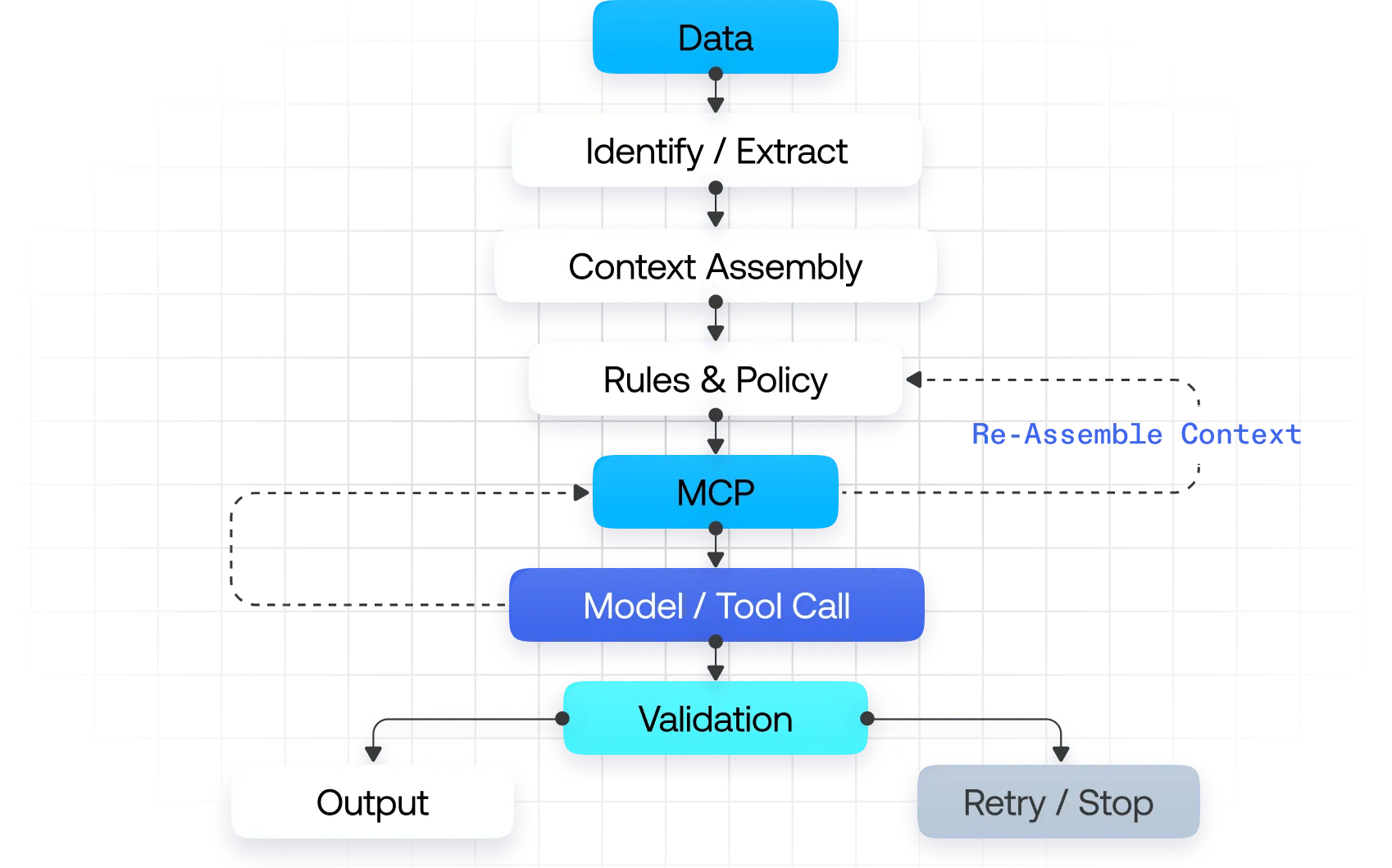
Meibel scores every extraction and every agent step across independent dimensions: Correctness, Coherence, Completeness, Faithfulness, Relevance, and OCR Confidence. Scoring is built into execution, not bolted on after.
Evidence-Backed Decisions
Outcome Provenance
Decision-Aware Automation
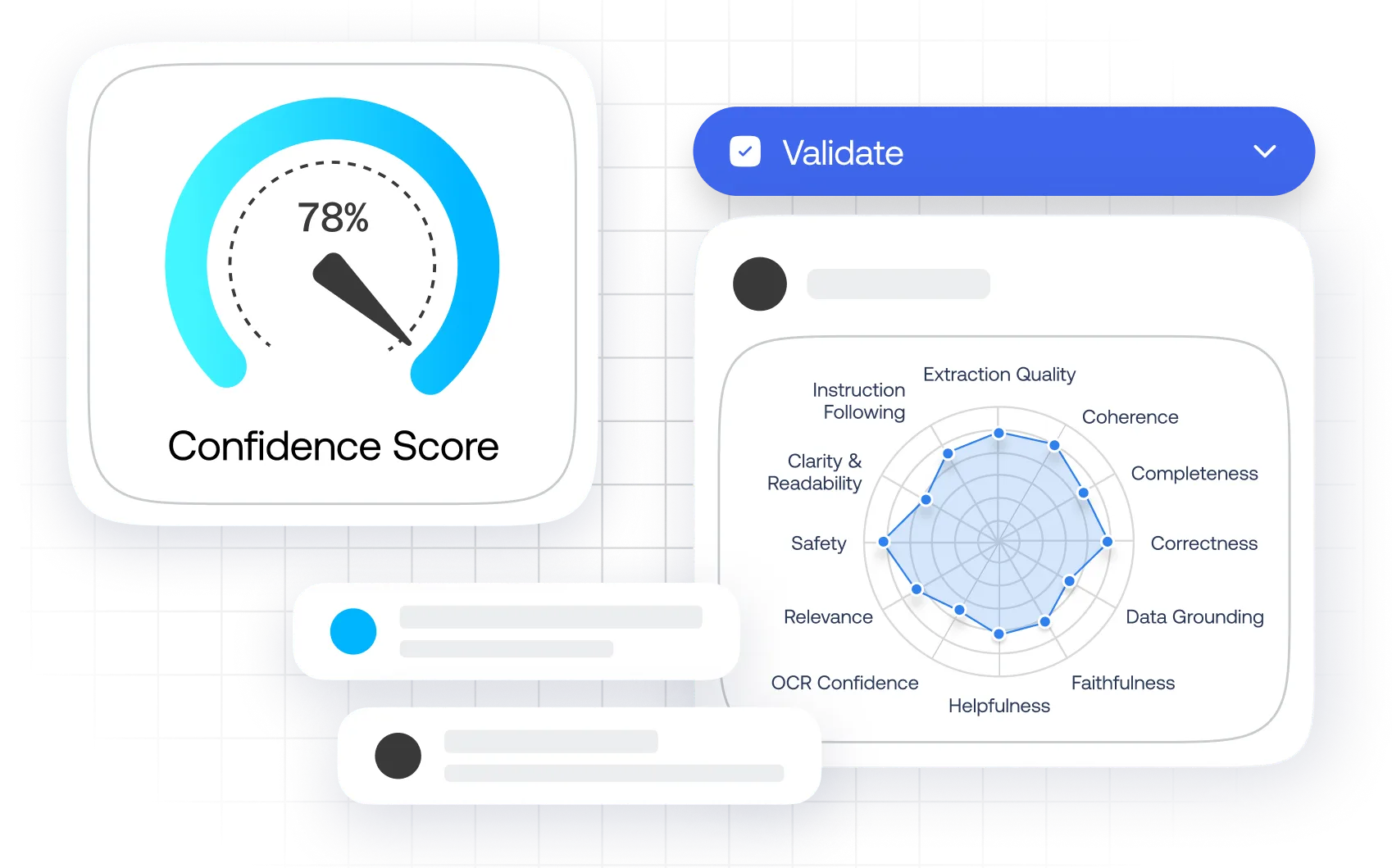
CONFIDENCE SIGNALS
Confidence is evaluated across retrieval, context assembly, tool execution, and model generation. Scores are consistent regardless of which model, tool, or data source is involved. When any component changes, the confidence layer detects the impact. No need to rebuild the evaluation framework.
WHAT ENTERPRISE AI TEAMS BUILD WITH MEIBEL








Retrieval by meaning is one of three modes, not the whole system. Standard RAG matches a query against chunks and returns passages. A Meibel datasource also keeps your structured data queryable by its columns and values, and keeps the references between documents traversable, and the agent chooses which mode fits the question. The platform recovers structure during ingestion rather than relying on similarity alone.
No. The datasource is separate from the agent definition. Agents bind to it, so changing a model or publishing a new agent version does not touch the prepared data.
Tables are rebuilt as grids with rows, columns and spanning cells, and stay addressable by cell position. Line and scatter charts are digitised back into series data rather than described in prose.
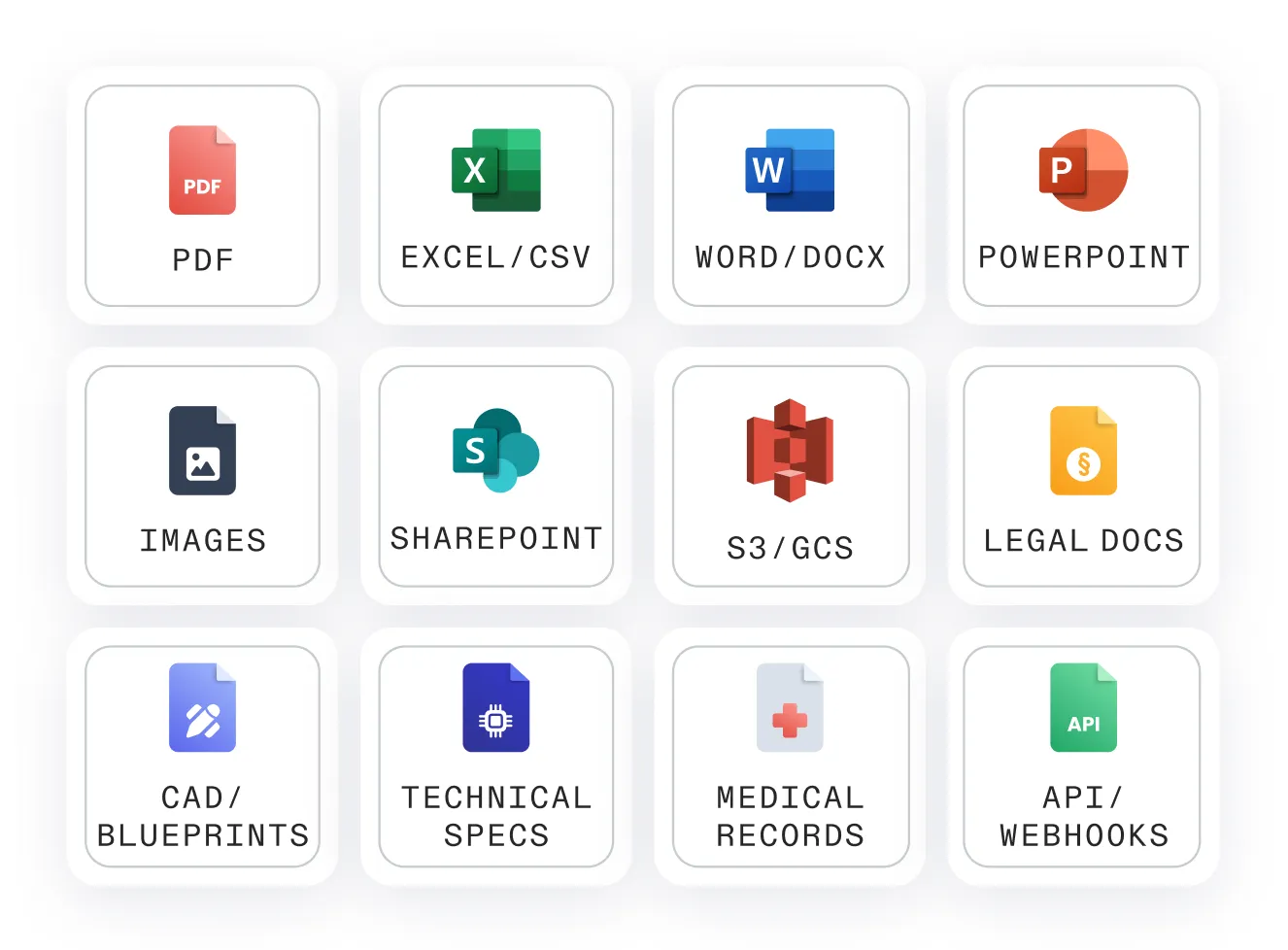
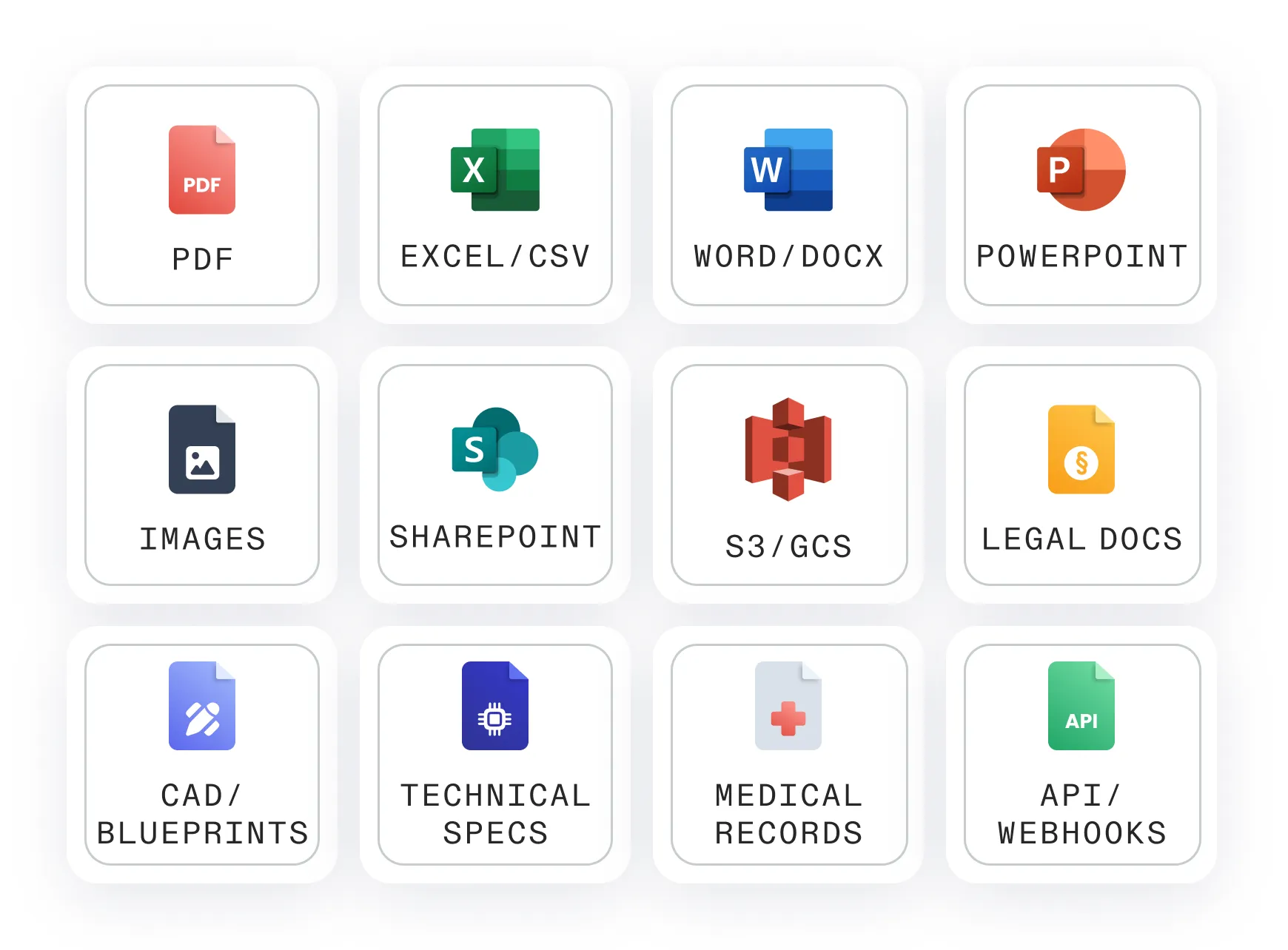
25+ formats including PDFs, office documents, images and scans, email and archives. Medical records are supported. CAD and blueprints are not.
There is no practical page ceiling. Documents up to 1 GB, and that limit is raisable per customer through the API.
No. Meibel orchestrates how data is prepared and used for AI without replacing your storage. It adds structure, metadata and provenance between your sources and your model calls.
No. Meibel orchestrates how data is prepared and used for AI without replacing your storage. It adds structure, metadata and provenance between your sources and your model calls.
Upload a real document, the messy kind. Get back structured data. Then build an agent on it and run the same thing at whatever volume you have.




.webp)