How a Leading Industrial Consulting Firm Turns 1,000-Page Equipment Manuals into Production-Ready Maintenance Data in Minutes
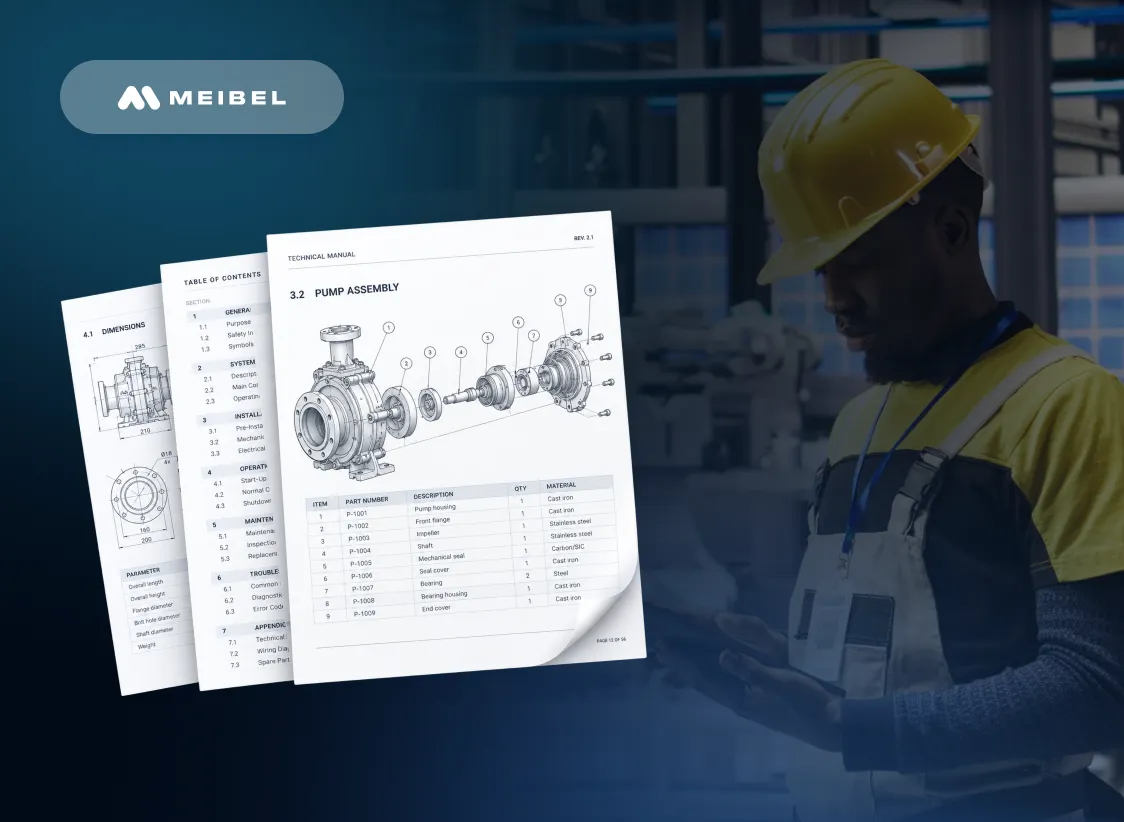


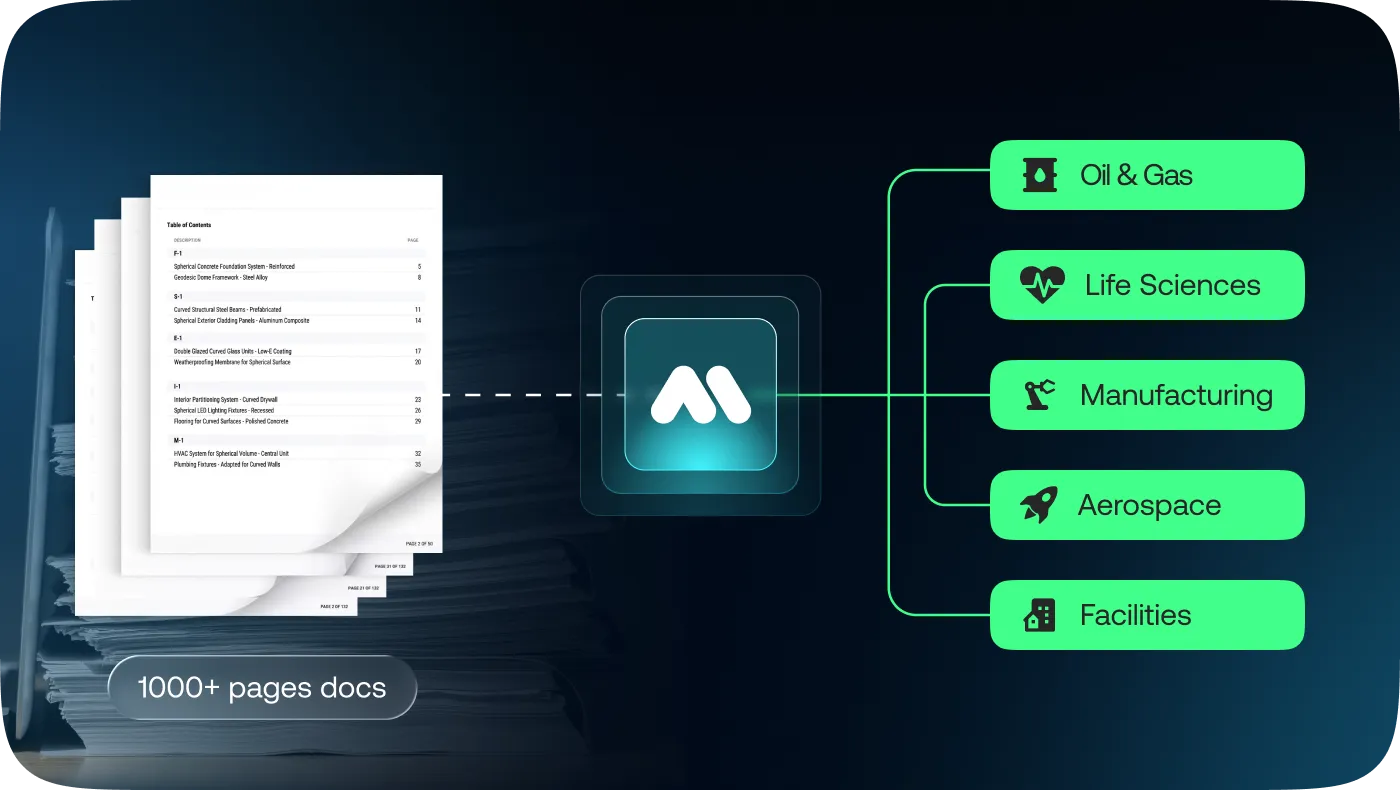
Strategic Maintenance Solutions (SMS) is the top North American IBM Maximo implementation partner, with 27 years of experience delivering enterprise asset management solutions across oil and gas, life sciences, manufacturing, aerospace, and facilities management. With over 100 employees and hundreds of Maximo deployments completed, SMS helps industrial organizations design, implement, and optimize the maintenance systems that keep critical infrastructure running.
SMS’s reliability engineering team read, interpret, and manually distill massive OEM equipment manuals into the preventive maintenance routines, spare parts lists, and job plans that populate their clients’ Maximo systems. It is painstaking, high-stakes work. And until now, it has been almost entirely manual.
— SMS Technical Lead
The Problem: Manual Document Work at Industrial Scale
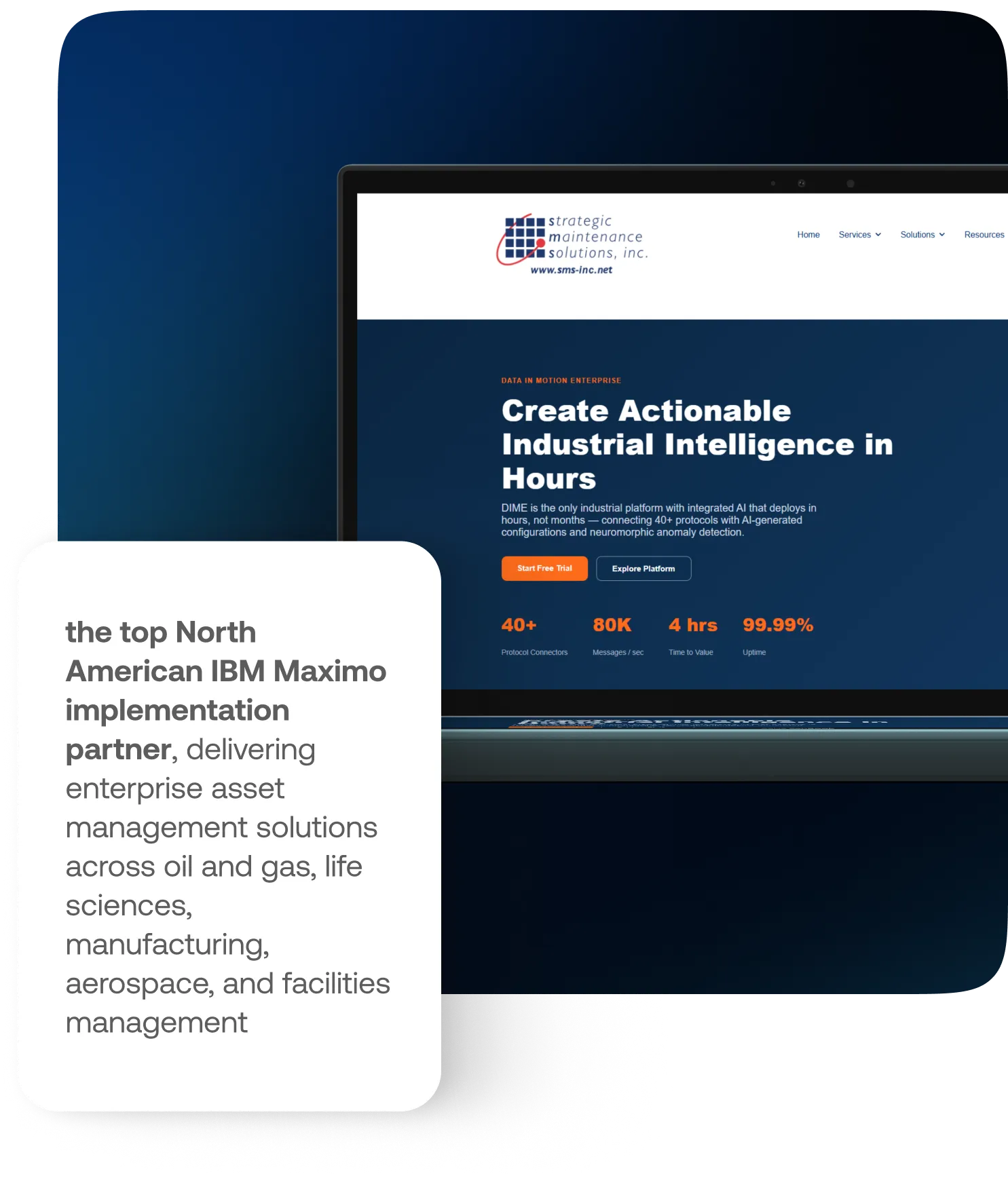
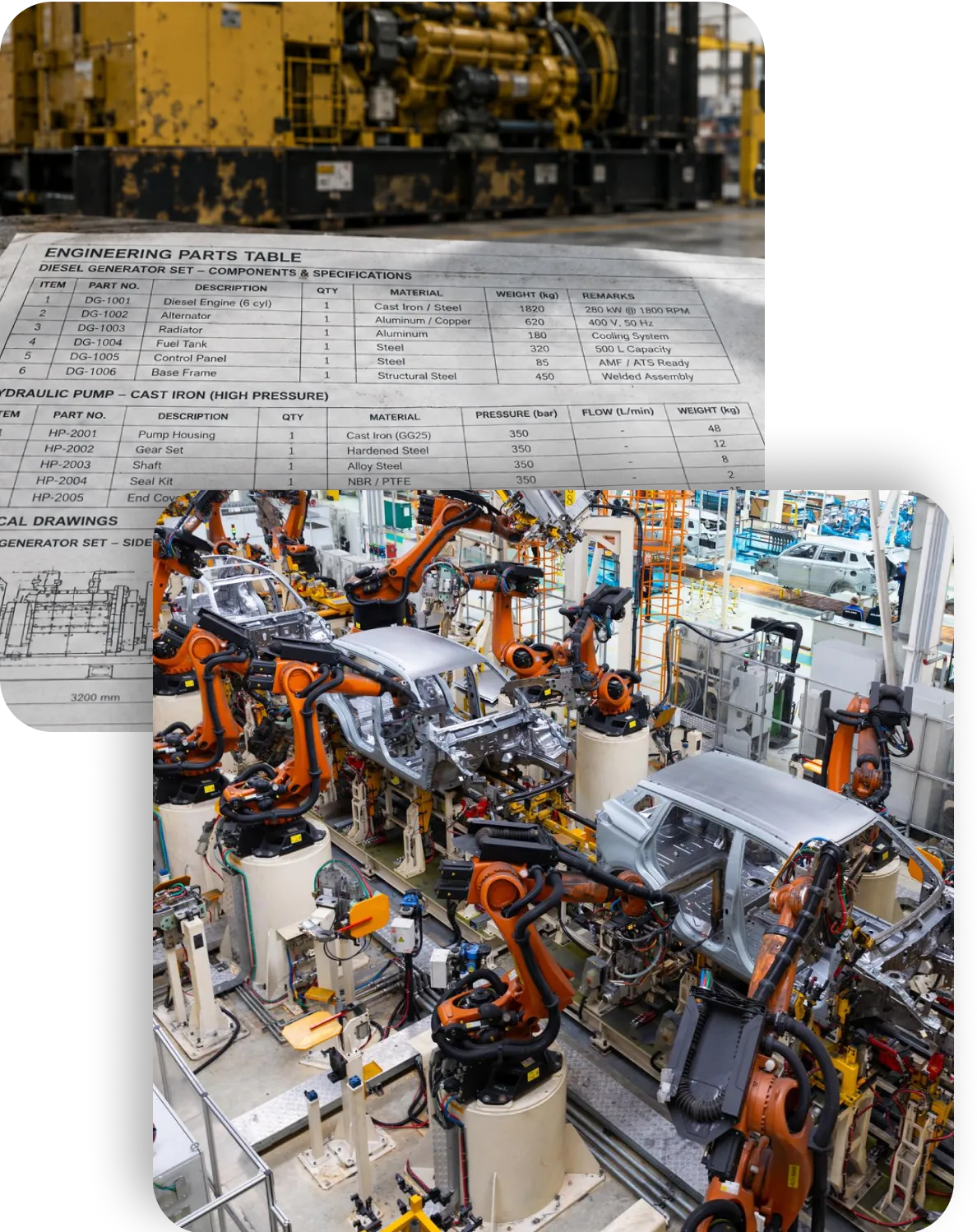
Every time an industrial client commissions new equipment or launches a capital project, SMS receives a library of manufacturer documentation. Caterpillar engines. Pump assemblies. HVAC systems. Each piece of equipment ships with operator and maintenance manuals that can run over 1,000 pages.
Buried inside those manuals are the maintenance intervals, task procedures, and spare parts specifications that SMS needs to extract, structure, and load into IBM Maximo. The work involves:
Reading and interpreting heterogeneous documents across PDFs, Word files, Excel spreadsheets, and scanned images, often in multiple languages
Extracting structured data including part numbers, serial numbers, model IDs, manufacturer names, maintenance intervals, and task steps from unstructured prose, tables, and diagrams
Resolving conflicting information where the same part or component appears multiple times across a long manual with different values, requiring deduplication and conflict resolution
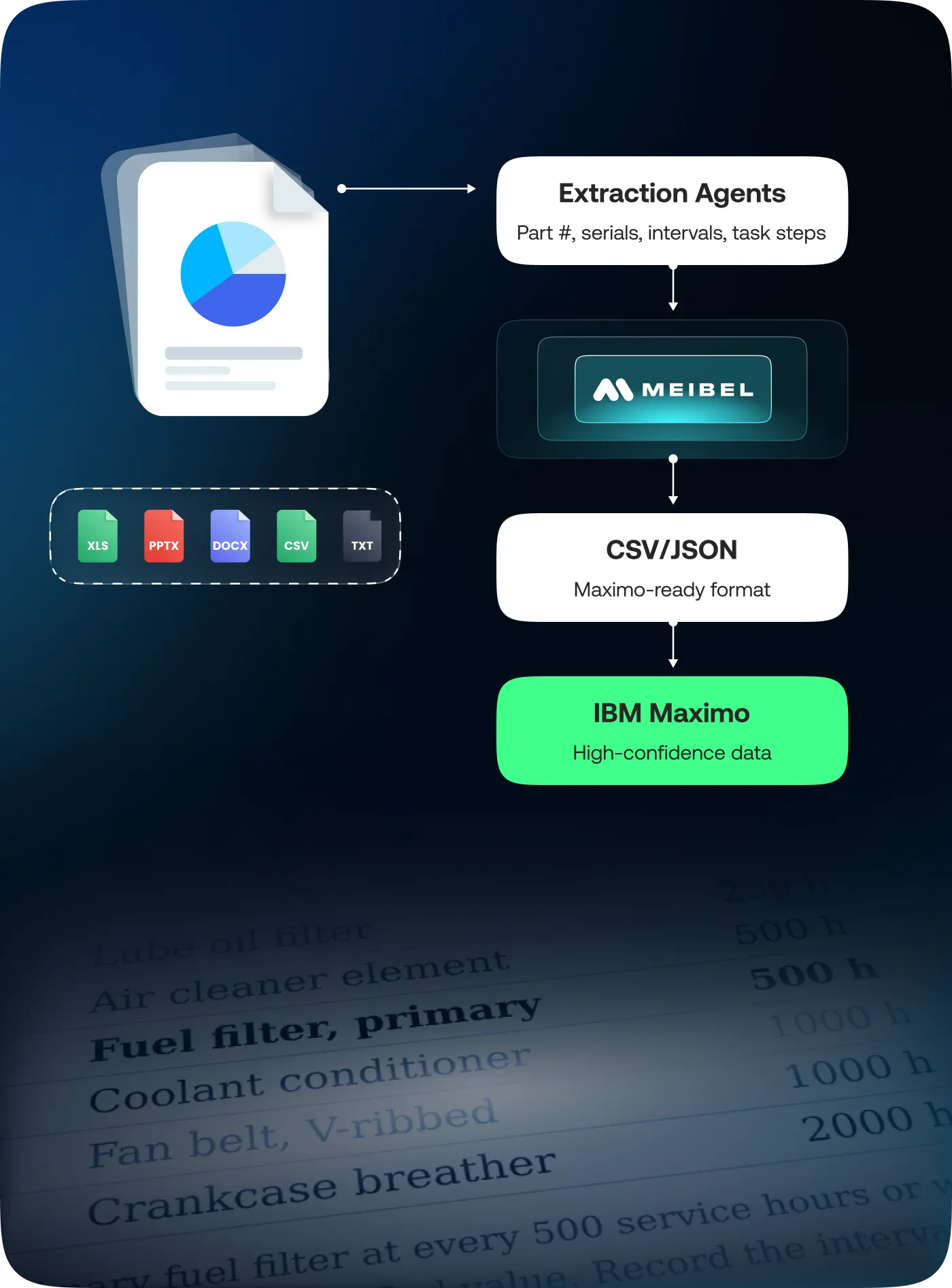
Producing production-grade CSV/JSON outputs formatted for direct import into IBM Maximo’s asset, parts, and PM scheduling modules
Business Impact
For a single capital project, this can mean processing thousands of documents across hundreds of asset types. SMS’s consultants spend days manually sifting through documentation, creating parts lists, and entering data, work that is time-consuming, error-prone, and difficult to scale.
SMS had experimented with open-source RAG solutions and third-party parsing tools, but struggled with accuracy, speed, and scale. Standard extraction tools failed on the complexity of industrial documentation: mixed content types, inconsistent formatting, tables embedded alongside prose, and multilingual content.
Why SMS Chose Meibel
1. Understanding, Not Just Extraction
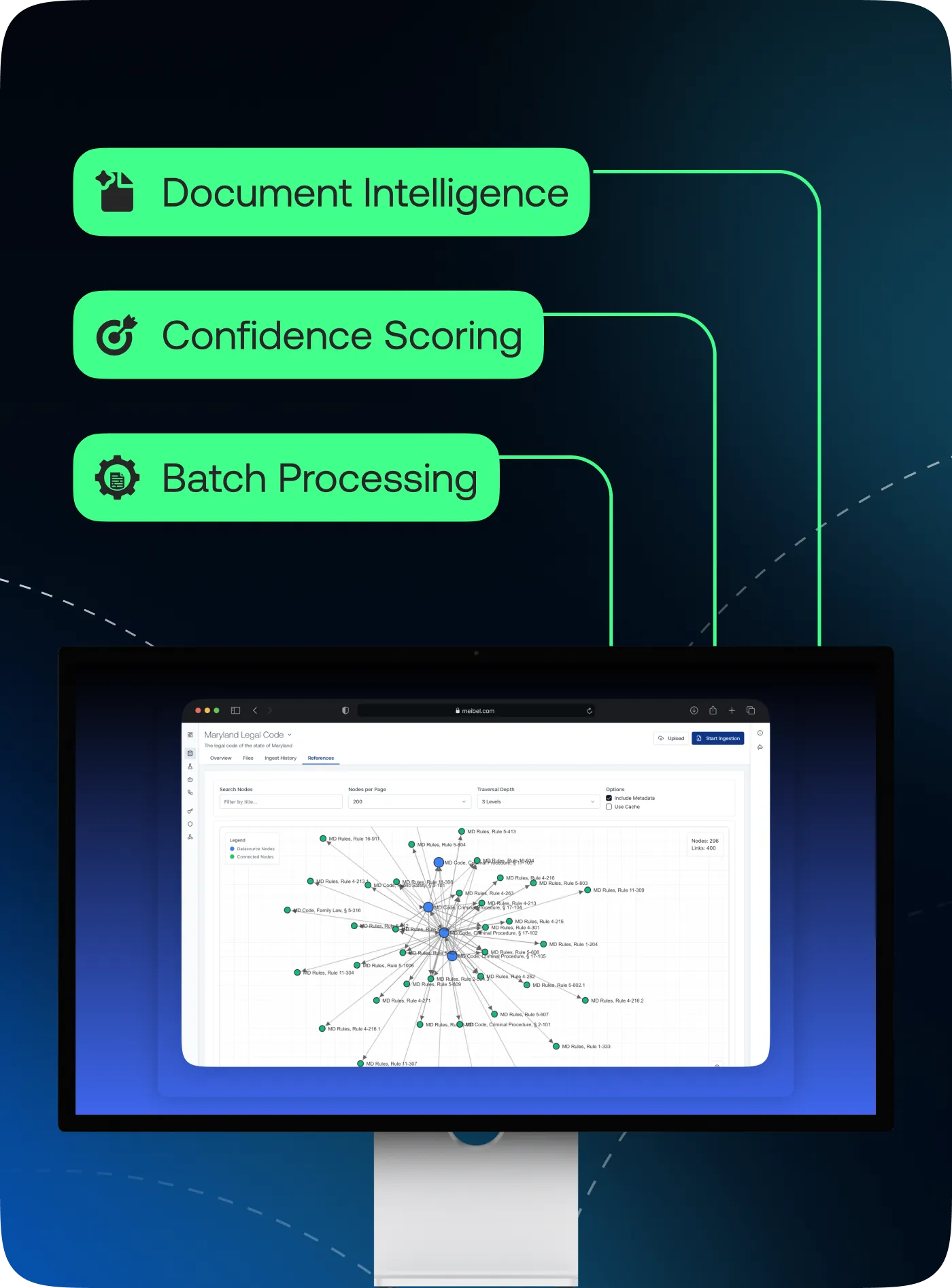
Meibel’s Document Intelligence understands layout, reading order, table structure, and the relationships between elements on a page. For SMS, this means a 132-page Caterpillar GenSet manual is processed with its tables intact, its maintenance schedules preserved in context, and its parts lists structured accurately, even when the formatting varies from one manufacturer to the next.
2. Confidence Scoring on Every Output
In reliability engineering, extraction errors create real downstream consequences. A wrong part number in Maximo means the wrong part gets ordered. A missed maintenance interval means a critical inspection gets skipped. SMS needs measurable confidence on every extracted value.
Meibel provides confidence scores across OCR, extraction, and processing steps, integrated directly into the output. When scores are high, the data flows straight into Maximo. When scores are low, the system flags the output for human review. SMS’s team knows exactly where to focus their attention instead of re-checking everything manually.
3. Batch Processing at Scale
SMS doesn’t process one document at a time. A single client engagement can involve hundreds of asset types and thousands of documents. Meibel’s batch processing architecture handles this volume natively: the same agent that extracts spare parts from one manual processes an entire library, producing consistent, structured outputs across every document in the batch.
The Solution: From Manual Sifting to Automated Extraction
SMS’s implementation with Meibel follows a structured pipeline:
Step 1: Ingest the Document Library. OEM manuals, maintenance guides, and parts catalogs are ingested into Meibel’s Document Intelligence layer.
Step 2: Extract Structured Data with Purpose-Built Agents. SMS configures extraction agents with defined output schemas matching their Maximo import requirements: part number, serial number, model ID, manufacturer, quantity, description, maintenance interval, and task steps.
Step 3: Resolve Conflicts and Deduplicate. When the same component appears multiple times with conflicting values (different serial numbers, different manufacturer names), Meibel surfaces all candidate values with their source locations and applies conflict resolution.
Step 4: Score and Route. Every output receives a confidence score. High-confidence extractions flow directly into CSV/JSON files formatted for Maximo import. Low-confidence extractions are flagged for SMS’s consultants to review.
Step 5: Scale via Batch Processing. The same agent definition that processes one document processes thousands. No code changes. Same output structure, same confidence scores, same Maximo-ready format.
The Impact for SMS As a Partner
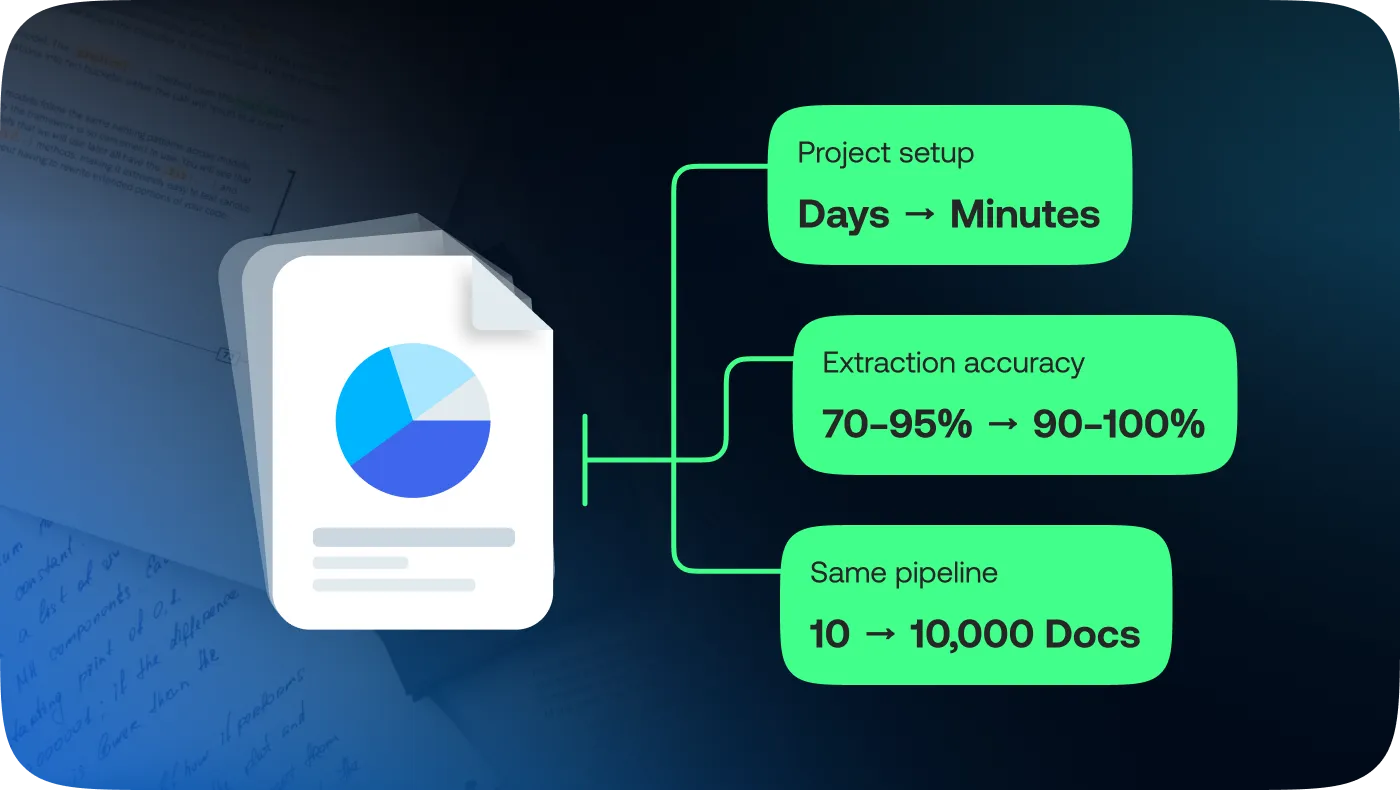
Faster project delivery: Capital project setup that previously required days of manual document sifting now runs in minutes. SMS accelerates PM schedule configuration, storeroom lockdowns, and parts list generation across every client engagement.
Higher service quality: Extraction accuracy improves from a 70-95% baseline to 90-100% using Meibel’s batch pipeline and prompt architecture. Confidence scoring eliminates the guesswork that previously led to rework and missed data.
A scalable, repeatable capability: SMS is building Meibel into its services delivery model, not as a one-time tool, but as a reusable capability that applies across every Maximo implementation. The same extraction pipeline works whether the client has 10 documents or 10,000.
Competitive differentiation: SMS positions AI-powered document processing as a value-added capability in client proposals and RFPs, differentiating from competitors who still rely entirely on manual extraction. This strengthens SMS’s win rate on capital projects where speed and accuracy are evaluation criteria.
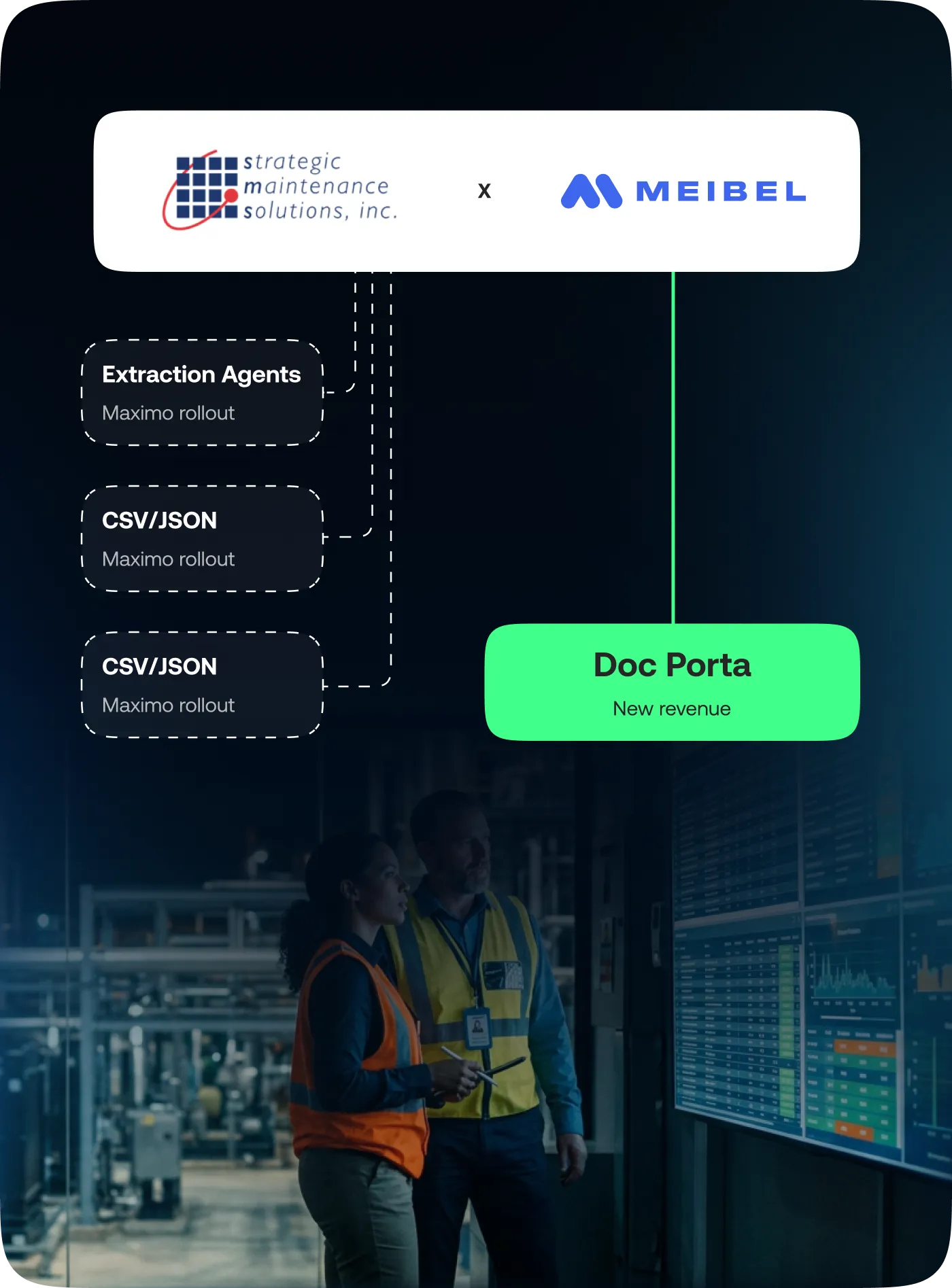
New revenue opportunities: Beyond internal services acceleration, SMS sees a path to offering a client-facing documentation portal, a self-service interface where end users can query equipment and maintenance documentation without manually sifting through manuals.
The Impact For SMS’s End Client (Industrial Manufacturer)
Reduced capital project timelines: Equipment commissioning and maintenance system setup happen faster because the data extraction bottleneck is removed. New assets are operational in Maximo sooner.
Higher data accuracy in Maximo: Spare parts lists, PM schedules, and job plans are populated with confidence-scored, source-traceable data rather than manually entered values. Fewer errors mean fewer wrong parts ordered, fewer missed inspections, and less maintenance rework.
Lower total cost of maintenance data preparation: The manual effort of reading, interpreting, and entering data from thousands of pages of OEM documentation is reduced dramatically. Consultant hours shift from data entry to higher-value reliability engineering work.
Consistent results regardless of document complexity: Whether the equipment ships with a clean digital PDF or a scanned, multilingual manual with handwritten annotations, the extraction pipeline handles it. The end client gets the same structured, production-grade output every time.

Why This Matters
SMS’s use case represents a pattern that repeats across every asset-intensive industry. Equipment manuals are not going away. Maintenance systems still need structured data. And the gap between what arrives as a 1,000-page PDF and what needs to exist as a row in a database has historically been filled by human consultants reading page by page.
Meibel closes that gap. Not by replacing the consultant, but by giving them a platform that reads, structures, scores, and scales the document work they already do, so they can focus on the engineering decisions that actually require expertise.
Try Meibel
Take Control of Your AI
Empowering engineering and product teams of any size to quickly build, run and scale Explainable AI Experiences.




AI OPERATIONS INSIGHTS
Learn How Teams Build with Agentic Ops
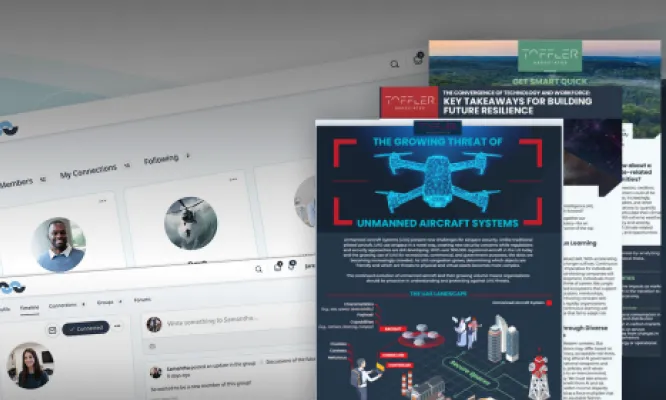
Democratizing AI: Breaking Down Barriers to Innovation
For decades, Toffler Associates has been the firm that helps leaders see what is coming next. Born from Alvin and Heidi Toffler’s...
REQUEST A DEMO
Start Building AI You Can Measure & Trust
Bring transparency, traceability, and proof to every model, at runtime.